Wooassist

Assistance for Your Woocommerce Store

  • How it Works
  • Pricing
  • Services
    • Site Maintenance
    • AI SEO and Content Marketing
  • Blog
    • How-To Articles
    • Code Snippets
    • SEO For E-Commerce
    • Theme and Plugin Reviews
    • Wooassist News
    • WordPress/WooCommerce News
    • Interviews
  • About Us
  • Contact
You are here: Home / Archives for call-to-action

Design Tweaks on WooCommerce

January 29, 2015 By John Leave a Comment

SnapCrab_2015-06-26_15-14-47_No-0000

Your online business using WooCommerce is all set. Each important element is in place and accounted for. Your website is done. You get regular traffic. You got your marketing strategies in place. You have a blog and you are active in social media. You think you’ve got it all covered, but then a few things start to bug you.

Optimize Web Design

You realize the design needs few tweaks and you come up with a few ideas that should be able to increase sales. What you have to do right now is optimize your design for better conversion rates. This is called conversion rate optimization.

A few design tweaks on your website will help increase your conversion rates. It may involve adjusting or repositioning some visual and design elements. Color, images, cues and their placement on your landing or checkout pages, are all part of optimizing your web design – see here design tweaks.

Keep Your Design Simple

Your website needs to look good, but not necessarily flashy. Simplicity in your design can go a long way towards increasing conversions.

It is understandable that you’d like to fill your pages with a lot of useful features and elements. However, it could also be a hindrance. Visitors would usually turn away from complicated designs. Keep it simple and understandable.

Design Tweaks

In changing the colors on your website, take the context into consideration. Make use of call-to-actions (CTA), and place them in a favourable manner to make your visitors take action. The design of your website should encourage visitors to want to browse more. Essentially, they should immediately see what they’re looking for.

Use the right amount of white space. It can definitely put emphasis on where it is needed. It is a simple and effective way of making sure that important elements of your site are easy to locate. This post enumerates user interface tweaks can you make, to improve your conversion rates.

Know Your Audience

An important part of adjusting your site’s design is learning about your potential customers. Understand who they are what their personalities are like. That way, you could adjust your design elements to fit in with them.

SnapCrab_2015-06-26_15-15-17_No-0000

You can read more about customer personas in these articles:

New MailChimp User Persona Research

Web Design Tips that Increase Conversions

Having a clear idea of your current users can help you better empathize with them. Combining these tips will not only get people to visit your site, but also encourage visitors to take the next step.

A few design tweaks on your WooCommerce store can set you up for better conversions which will in turn lead to better sales for your business.

Filed Under: How-To Articles Tagged With: call-to-action, colors, conversion optimization, CSS, customer persona, design tweaks, how-to, optimizations, WooCommerce

How to Create Calls-to-Action that Convert Online Sales

January 28, 2016 By John Leave a Comment

calls-to-action

Successfully selling online requires more than just posting your products on a WooCommerce site and hoping for the best. You also must increase your e-commerce site’s traffic with visitors that match your target market. This takes a considerable investment of time and money, so before that investment you need to make sure you are set up to convert all those visitors into customers. In this post, we will teach you how to create calls-to-action that convert for your WooCommerce store.

What is a Call-to-Action?

For e-commerce sites, a call-to-action (CTA) is a message that moves visitors toward your desired response. It can be a hyper-linked text or phrase, a button, a banner or any clickable element. Calls-to-action are usually seen in lead generation, sales funnels, trials and downloads. Its purpose is to help you achieve a goal or a conversion for your e-commerce store.

Why are Calls-to-Action Important for E-Commerce Stores?

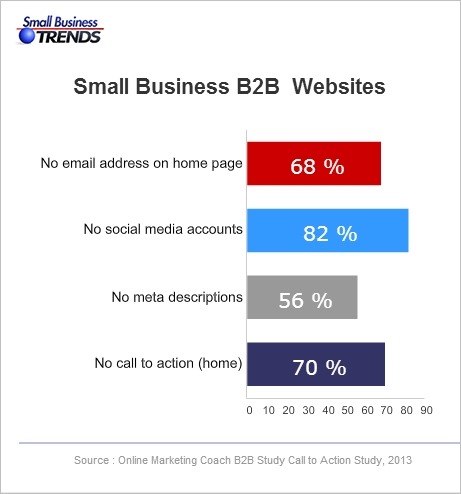
Ever wonder why some e-commerce sites make it big online while some do not? A survey on website failings showed that 70% of websites that fail do not have a CTA on their home page. Good website design and high traffic is not enough to get higher conversion rates. CTAs tell your visitors or audience what actions they can take.

B2B-call-to-action
Source: http://smallbiztrends.com/2013/08/b2b-small-business-websites-lack-call-to-action.html

There are nearly a billion active websites today. People could easily switch to another website if you don’t get them to take action. Your CTA is your marketing tool to educate, engage, and capture your potential customers. It will help you increase your conversion rate as you guide visitors to complete your e-commerce goals.

cta-samples-wooassist-view-plan

How to Create Calls-to-Action that Convert for Online Sales?

Having a CTA is not as simple as putting a text over a button. A weak or an unclear call-to-action may impede the sales process and you could end up losing a client. 30,000 new consumer products are being launched every year. Unfortunately, Clayton Christensen of Harvard Business School found that 95% of them fail.

Businesses often fail because they don’t take the time to understand their customers. Try to understand reasons behind sales and use that knowledge to your advantage. It will not only increase your online sales but promote customer loyalty.

There are four things you need to know to be able to create calls-to-action that convert online sales for your e-commerce store.

The Copy

You are often limited to just a few words or a phrase but that does not mean you should take this lightly. A subtle word change can make a big difference. Here are a few tips that you should consider.

Determine your Outcome

What outcome and action do you want from your audience? Is it accessing your shop page, signing up on your email list, downloading a trial version of the software, or downloading your e-book? Being clear with your desired outcome will allow you to get the results you want. CTAs should use specific, understandable and concrete language to lead customers to your goal. Avoid using ‘cute’ and vague language. To be effective, a customer must know what’s going to happen when they click on your CTA.

cta Change your life
Example of a vague CTA
cta Interested
Example of cute language. This CTA may seem attractive to some but it does not get as much clicks as ‘Download E-book’.

Identify your Audience

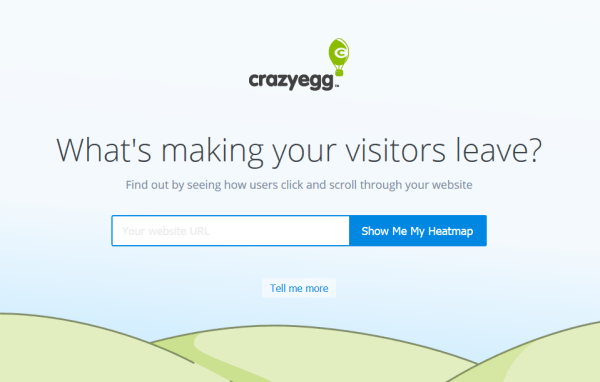
A CTA that works wonders for another website may not work the same way for you. A generic or copied call-to-action will work but conversions sky-rocket more with optimized versions. You can use analytics data to help you decide. Know your audience. Create a customer persona. By understanding your audiences’ desires and needs, you can convert them to paying customers better.

cta sample crazyegg
Crazy Egg asks its potential customers to try out their service for free.

Tailor to your Platform

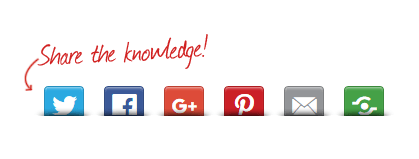
Different platforms offer different methods of interaction so modify your call-to-action to the common responses for each medium. Requesting a comment or reaction is appropriate on a blog or social media post but not on a landing page.

cta sample share
This is the kind of CTA that you’ll use in a blog post.

Position is Key

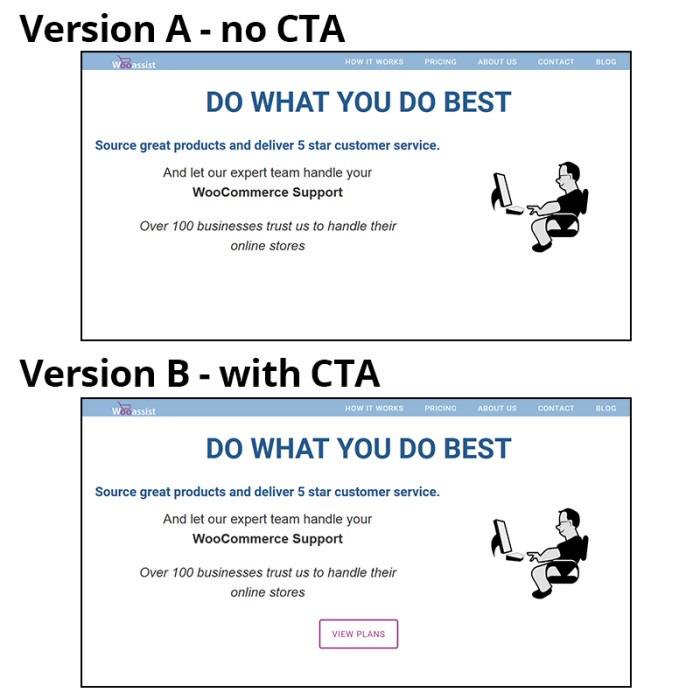
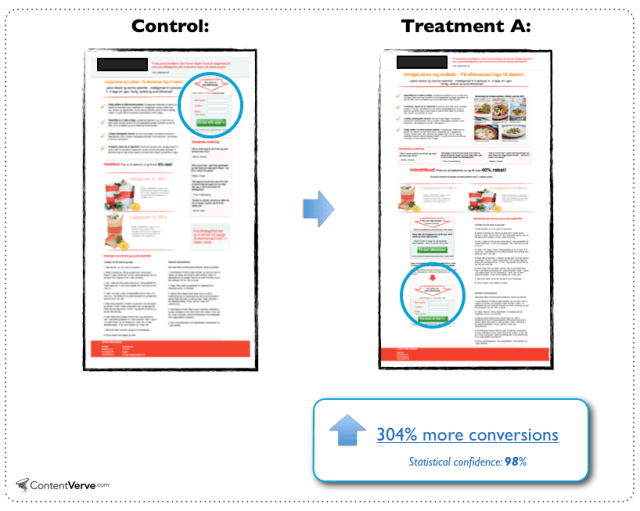
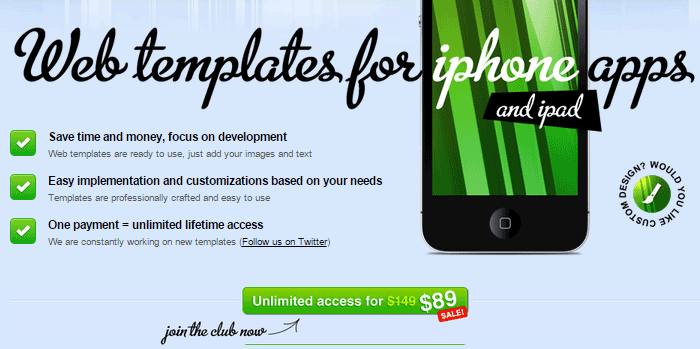
Calls-to-action should be placed after informing your visitors of what they are getting at. It can either be above the fold or below. You can also consider following the F pattern. You can add it at the end of a video or set up your website to display them before your visitor exits.

cta ab test sample
People need information so the change in location benefited this landing page.
Source: http://contentverve.com/10-call-to-action-case-studies-examples-from-button-tests/

Design is Important

Design should make your CTA noticeable but it should not interfere with your design. Don’t be too pushy with getting a sale as this might actually harm your online conversions. Your CTA needs to stand out from all the clutter. Try using white space to draw in more attention to it.

cta sample amazon ctas
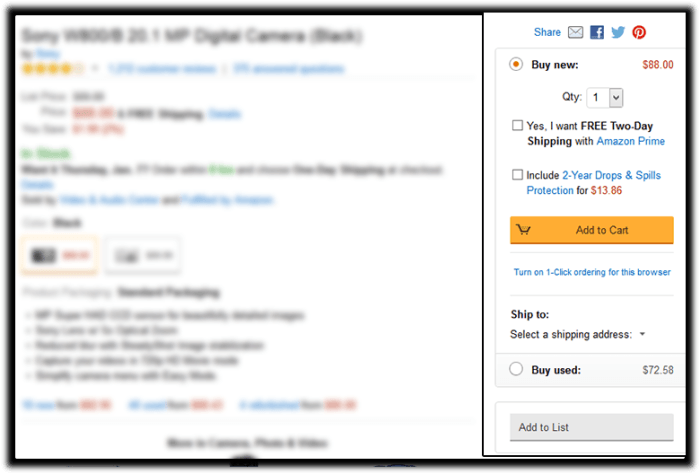
Amazon’s add-to-cart button stands out more than other CTAs in this sidebar. Its cart icon is good for visual association.

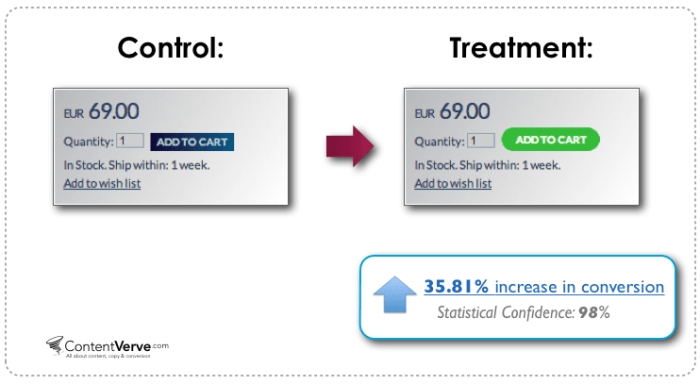
Colors help you increase your online conversion rates because colors have implied meanings. Your design needs balance. If you need a large button, choose a less prominent color that is relative to the elements around it. For smaller buttons, you may choose a brighter color. You can also make use of subtle hover animations.

cta ab test sample color
Change in color and design can increase conversion.
Source: http://contentverve.com/10-call-to-action-case-studies-examples-from-button-tests/

Optimization

Your CTA may be converting but is it the best one? Getting a high converting CTA needs constant testing. Set up your analytics and tracking services first. Use Google Analytics or Crazy Egg’s heat-maps and scroll-maps. You can also use A/B test services like Split Button for optimization. Once you have the data, do not be afraid to experiment and use the data to your advantage. You can use these A/B test ideas to get you started or check out this guide from Neil Patel on how to do split testing.

Summary

Calls-to-action help you to have higher conversion rates and good ROI for your e-commerce store. Good strategy, monitoring and optimization are keys to good CTAs. What calls-to-action ideas, experience and online marketing tips would you like to share for other online store owners? Let us know in the comments.

Filed Under: How-To Articles Tagged With: call-to-action, conversion optimization, e-commerce, how-to, marketing strategy, optimizations

How to Use Google Analytics to Track Website Goals in WooCommerce

May 25, 2016 By John 4 Comments

Google-Analytics

Knowing your site’s stats is critical in decision making to guide your site to success. Google Analytics is a web analytics service designed for this particular job. If you have a WooCommerce store, you probably have it set up to gather traffic data. In this article, we will teach you how to use Google Analytics to track website goals. Get more value from Google Analytics by tracking the completion of your site goals.

What is Google Analytics?

Google Analytics is a free web service from Google that tracks and reports website traffic data. It was launched in 2005 and is available to all users, whether they use Google for advertising or not. It is tightly integrated with Google Adwords, the company’s main advertising service, as it helps users keep track of their online web marketing campaigns. But using Adwords is not a necessity in order to get the most out of the Analytics.

Why Should You Use Google Analytics?

Google Analytics yields valuable information to help you make smarter marketing decisions, generate more leads and improve user experience. Traffic data can help you identify which of your blog posts provides the most user engagement and which one results in a conversion whether it’s a sale or an email sign-up. You can pinpoint the best time to post a new article. You can see the number of visitors who exit your site and from what page they exit. With that information on hand, you can look for ways to improve that specific page to reduce exit or what is known as bounce rate. In a nutshell, this treasure trove of data will be invaluable in your decision making for optimizing your website.

How to Track Completion of Goals in Google Analytics?

In Google Analytics, tracking page views and visitors is just the tip of the iceberg. Finding out if your website is actually accomplishing the goals you’ve set for your e-commerce site is more important. In fact, even if your traffic is ranging in the millions but you are not getting your intended conversions, that traffic is mostly worthless. This is where setting goals in Analytics come in. A ‘goal’ is a completed activity in your website that is tracked in Google Analytics. Defining your goals will depend on what kind of website you have. For an e-commerce site, goals can be a newsletter sign up, a purchase, downloading a trial software or e-book, or adding a product to a wish list.


Tracking your goals in Google Analytics will yield crucial data. If you see that many of your visitors add your products to the cart but exit when they reach checkout, there must be something in your checkout process that is preventing your visitors from completing purchases. You can then proceed to analyze and identify what factors you need to try and solve the problem After applying fixes, data from Analytics will help you identify if your tweaks have helped your conversion rates or not.

There are 4 ways to track goal completion: Destination, Duration, Pages per session, and Event.

Destination/URL Tracking

Your website is basically a network of pages represented by an identifier address or URL. Google Analytics provides an easy way to track specific URLs through destination goals. Each time someone navigates to a specific destination URL, it will trigger the goal as completed. This is the easiest and most common way to track goals because it is straightforward and easy to set up. This is ideal for tracking thank you pages every time someone subscribes, makes a purchase, or sends a contact email using the contact form, etc. which registers as a completed goal in analytics.

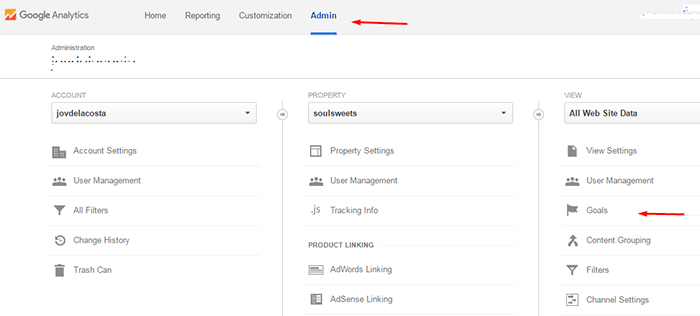
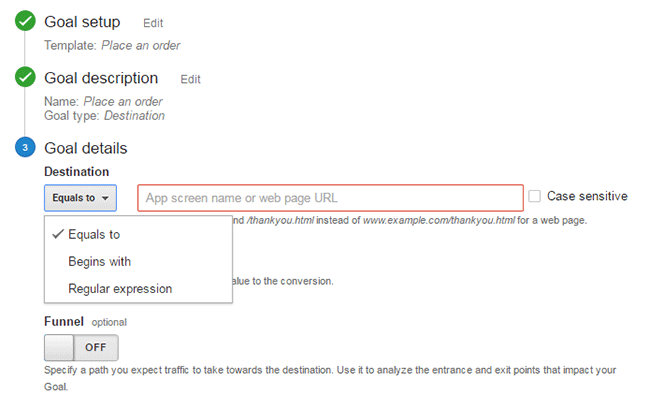
To setup a URL tracking goal, navigate to the Goals section in Analytics first. Go to Admin and click Goals.

how to use google analytics to track website goals

In Goal Setup, we set our goal name as “Place an order” and this goal will track how many visitors placed their orders/completed the checkout. Since checkout is normally closed with a thank you page, we can track how many times the thank you page is visited to track the number of purchases. Google Analytics also allows users to view other important statistics such as time on site and the referring URL which led to the sale.

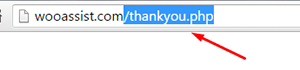
In Goal Description, set the goal type as Destination and enter the URL of your thank you page. You don’t have to enter the full URL, just the slug after the domain name will do. So, instead of www.example.com/thankyou.php, just enter /thankyou.php.

domain-slug

In Goal Details, select which of the below corresponds to your desired action.

  • Equals to – Requires the exact same string to trigger a goal. Good for tracking single pages.
  • Begins with – Only requires that string begins with the inputted URL. So if you put “/products” it will track any URL that starts with “/products”. This includes “/products/bags”, “/products/shirts”, etc. This is ideal for tracking a group of related pages under the same category.
  • Regular Expression – This is meant for advanced users. You can write wildcard terms to select a variety of URLs. You can read more about regular expressions in this guide.Google-Analytics_URL-Tracking_Goal-Details

Funnels

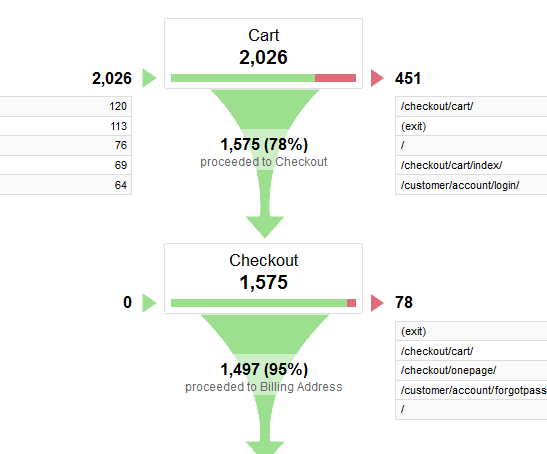
The basic concept of funnels for destination goals is to track a series of pages. These pages form the path you expect traffic to take. For example, you might want to get your visitors to watch a video of the product demo, proceed to add the product to cart, checkout and finally the thank you page.

Funnels are optional and not all e-commerce sites have a defined sales funnel. Still this should not be neglected. Tracking your funnel provides insights on how effective your website setup is in achieving your goal. When your visitor exits at the end of your funnel, the goal is triggered.

Setting up a funnel is very handy because you’ll also know how many visitors proceeded to each step. You’ll know at which step most of your visitors abandoned the process so you can make the necessary adjustments.

Google-Analytics_Funnel

Here is a sample data from a funnel. Notice that you can easily view how many proceeded to the checkout from the carts page.

Duration Tracking

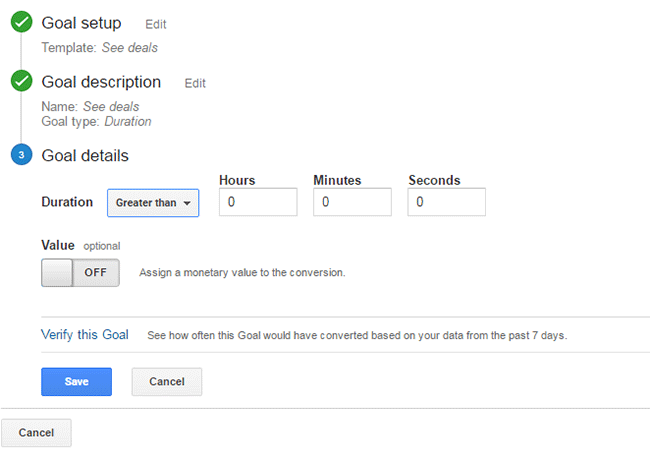
This tracks how much time the user spends on your site. To set this up, you just need to set a minimum amount of time in “Goal details” and if the user spends more than that, the goal will trigger. This tracking is useful for tracking goal pages with important content such as infographics, your portfolio or any other content that you want your visitors to view.

Google-Analytics_Duration-Tracking

Pages/Screens per Session

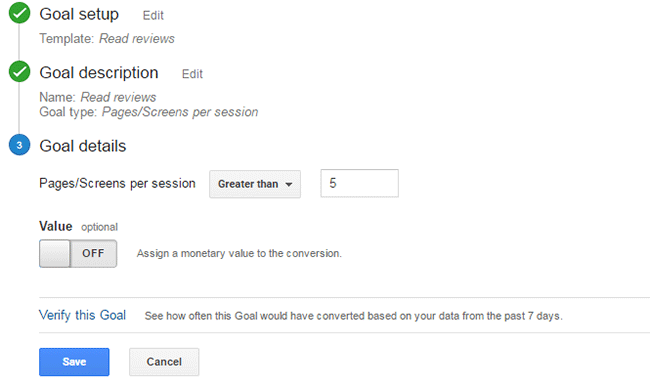
If your visitors reach a specific number of pages before exiting, it will trigger this goal type. This is useful when you have a lot of content that you want your visitors to view. This goal is used mostly by news and other media sites that earn advertising income.

To set this up, set Pages/Screens per session in “Goal details” and then choose a number that you want to target for your goal.

Google-Analytics_Pages-per-Screen

Event

This goal is meant for advanced users. You need to know some script coding to trigger the event. And it can be as specific as you want it to be. Using scripts on your site, you can track a click of the button, scroll on a page, and more specific actions that are happening during the visit.

Wooassist_Call-to-Action_View-Plans

Mostly, an event goal is used on button clicks. While you can use URL tracking to track button click, it becomes a problem when you have multiple buttons on different pages that point to the same URL. You won’t know which button was clicked. With event tracking you can keep track of each button individually. This is very useful in identifying which particular button or button design is more effective in completing your goals. To know more about setting up event tracking, you can visit Google’s guide for event tracking.

Conclusion

Remember that Google doesn’t retroactively track your goals. So it is important that you set up your goals as soon as you have your site running so that you can effectively start collecting data right away. Use the data you gather to improve your conversion rates. Google has provided you the resources to improve your site and increase your income. Now it’s up to you how you will use that data to your benefit.

Was this post helpful? Do you have any tips you’d like to share about Google Analytics conversion tracking? Let us know in the comments.

Filed Under: How-To Articles Tagged With: best practices, call-to-action, conversion optimization, e-commerce, Google Analytics, how-to, marketing strategy, optimizations

How to Write Persuasive Copy for Your Online Store

September 23, 2015 By John Leave a Comment

creating-persuasive-copy

Is your online store not giving the conversion rates you need? Something you might be overlooking is “persuasive copy”.

Persuasion and conversion go hand-in-hand. If you’re not persuading visitors, it’s going to be very hard for you to boost your conversion rate.

In this post, you’ll learn:

  • E-commerce Copywriting That Sells
  • E-commerce Copy Analysis – What’s Missing?
  • Elements of Persuasive Copy to Increase Sales
  • How To Write Seductive Sales Copy to Woo Your Customers

The Rise of Online Shopping

Online shopping is now extremely lucrative.

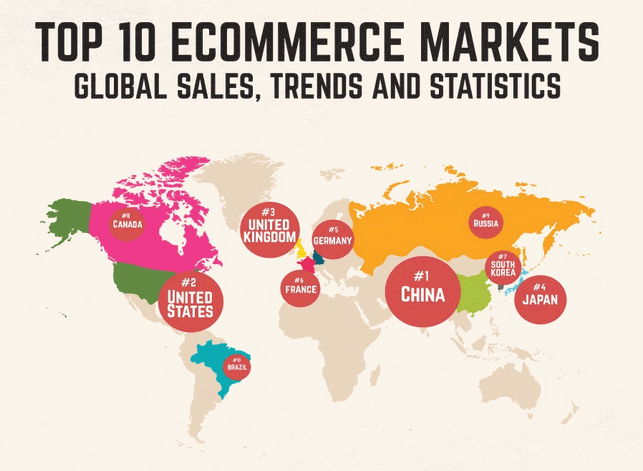
Just this month, Remarkety revealed that the world e-commerce market has amounted to trillions of dollars in sales projected for 2015. China has the biggest e-commerce market with $562.66B, followed by US with $349.06B and UK with $93.89B.

ecommerce-markets
Source: Remarkety

The numbers are surprising. No wonder both budding and existing entrepreneurs are taking advantage of the online market.

According to a study by Harris Interactive, 36% of customers gather information from a company website prior to making a purchase. Only 22% gather from face-to-face conversation with a salesperson, or other company representative.

This proves how important it is to fill your website with relevant information about your products or services. That information should be a credible, persuasive copy to enhance your visitors’ trust and convince them to buy from you.

E-commerce Copywriting That Sells

Your online store is part of a highly competitive web marketplace. It not only serves as a store, but also a catalog, marketing tool, and company information source. That is why you should know exactly how to sell with words.

Essentially, your copy must achieve two goals:

  1. Establish trust and
  2. Convince visitors that your product is right for them.

Setting Your Tone

Who, exactly, are you writing for?

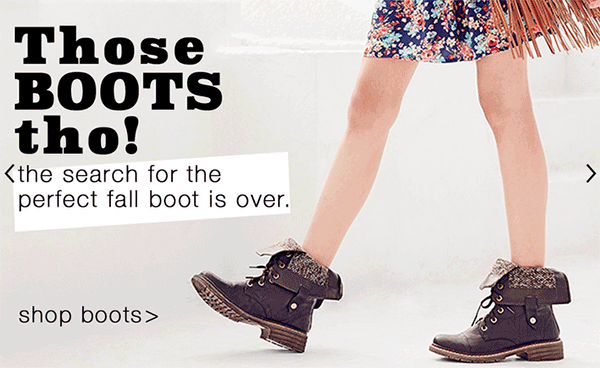
For instance, if your store sells products for teenagers, you wouldn’t want to use the formal writing style. Keep your copy focused on your target audience. Let your company’s personality shine through.

Image Source: http://store.delias.com/

Use this Customer or Buyer Persona to establish a tone for all of the copy throughout your site. Remember, each piece of copy is an opportunity to broadcast your brand.

There are three types of copy used by copywriters:

Informational. This is the type of copy often found in a site’s frequently-asked questions section. It offers customers to-the-point information. Straight-forward, uncluttered writing is often used, while still maintaining the tone.

Marketing. This copy is mainly used in promotional materials and product descriptions. It’s the most common form of copy, but it’s one of the hardest to write.

Notification. This copy appears when you want to notify a customer when they complete actions. They may encounter positive and negative messages. One example is when they stumble upon a dead link somewhere in your site.

Good Copywriting Samples

Being a copywriter isn’t easy. You need to have the ability to find the exact right words to sell whatever it is that your company is offering. Here are some websites with stellar copywriting.

Pay attention to their tones of voice.

1.     UrbanDaddy

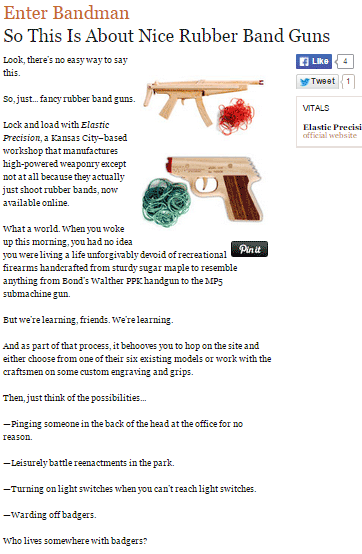
urbandaddy

This Enter Bandman copy is really far from ‘boring’. UrbanDaddy’s unique tone can be found in every single one of their copies. From their homepage down to their editorial policy, the company clearly knows their audience.

2.     GymIt

gymit

Instead of using the usual pics of ripped hunks and supermodels, with cliché fitness headlines, GymIt goes for a different approach. Their powerful copy is tailor made for the average Joe, and the humor’s great too!

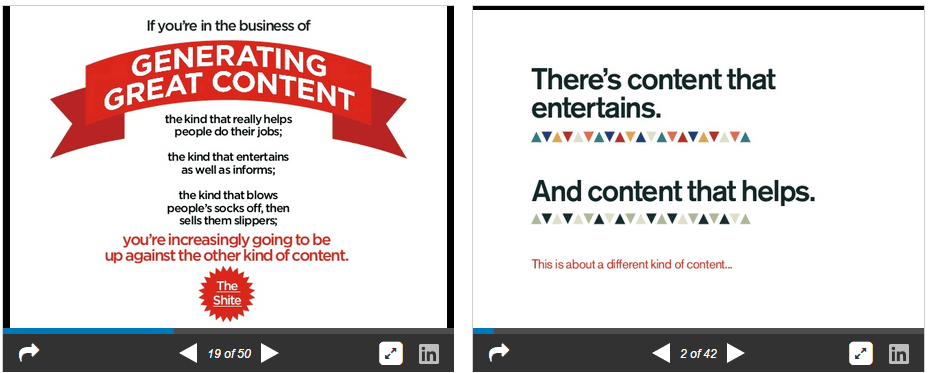
3.     Velocity Partners

velocity-partners

This B2B marketing agency’s co-founder, Doug Kessler, is dubbed as the master of word economy. You can check out their popular slideshares here.

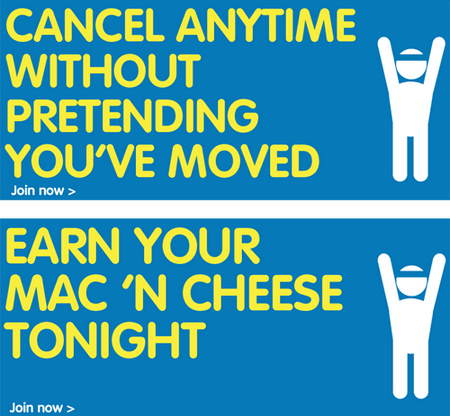
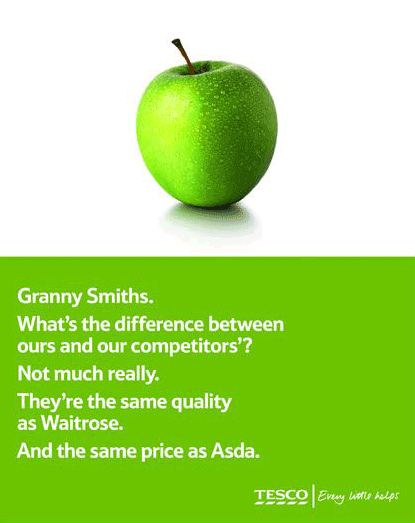
4.     Tesco

tesco

Tesco uses short sentences to captivate their audience, and they do it with a punch. It’s witty, personal, and effective. Of course, it depends on what you’re trying to sell and who your target audience is.

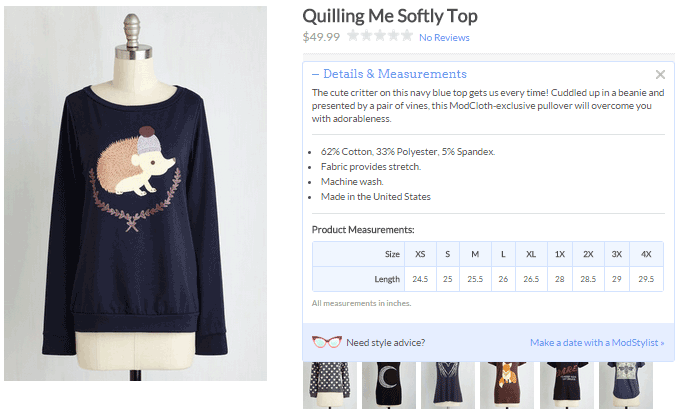
5.     ModCloth

modcloth

ModCloth is known for their joyous, pun-filled, and clever copy, especially when it comes to their product descriptions. They also tend to tell the story of what you’ll do while wearing their items.

Basic Rules to Follow

Avoid long sentences. Long sentences are difficult to digest, and inappropriate for persuading your audience. Shorten sentences by refraining from too many adjectives, adverbs, and pointless modifiers. Don’t use ‘for the purpose of’ when you can use ‘for’ instead.

Avoid jargon and clichés. Your aim is to sell and not to impress your readers with your vocabulary. Using jargon will only confuse your customers. If customers don’t understand something about your product, they won’t take the risk to buy it. Clichés are unoriginal and can only distract your readers.

Write in an active voice. This makes it easier to persuade your visitors to buy your products. It means to lead with the noun that is doing the action.

Hemingway is a great tool to run your copy through and reduce the fat.

E-commerce Copy Analysis – What’s Missing?

If you’re running an ecommerce site and you’re not testing your copy, you could be missing a huge opportunity to boost your sales. It’s recommended to test your copy for conversion drivers – relevance, clarity, and urgency.

ecommerce-copy-analysis

Relevance. Does the copy on the page relate to what the visitor thought he was going to see when he clicked on a link to your page? Be consistent with the incoming links.

Clarity. Does the landing page clearly articulate the value proposition? Clarity of content is often the most common factor ecommerce sites struggle with. If it’s hard to scan or understand, it can’t do its job.

Urgency. Is there an indication that the action needs to be taken now? The tone of the copy, offers, and deadlines can all influence urgency.

Test Your Copy

Businesses can make great gains by optimizing their site copy, content and headlines. As much as possible, find out what’s missing. Your visitors should understand your value proposition in your words.

While you’re focused on the merchandising aspects of your site, trying to get more products into carts, don’t neglect the benefits of testing copy.

Headlines

ecommerce-headlines

From the headline alone, do visitors understand why they should buy from your site, and not your competitors? Some sites bury their value proposition deep in the copy. Testing your headline can yield surprising results.

Most marketers know that connecting with customers on an emotional level is a key driver to increased sales and loyalty.

Transactional messages

ecommerce-shopping-cart

Managing your customer’s expectations reduces buyer anxiety. This copy drives action, and guides the customer towards completing the sale. Clarify expectations such as when to expect their shipments, or what will happen when they click the order button.

Tone of copy

Are you conveying the words your customers want to hear? Of the two call-to-actions, the first one was clear, but not compelling. The second is more personalized, gives a more positive message, and therefore more effective.

“Please select your tax-deductible gift amount below.”

“Yes I will donate a tax deductible gift of:”

Ideas, not words

Once you know what’s missing, you can apply the results across all the copy on your site. If you’re testing the effect of customer-focused copy, you might learn something about how your customers react.

Elements of Persuasive Copy to Increase Sales

Your copy should be engaging and should bring customers closer to your brand, allowing them to see what’s in it for them. A copywriter persuades customers to see their point of view. They want their writing to influence others in a positive manner.

Let’s have a look at the elements that contribute to persuasive copy:

1.    Conversational Tone

You won’t win over your readers with hyped copy. Customers turn away from anything over-the-top, especially those related to sales.

The first rule to writing persuasive copy is to write as you talk. Create that personal connection. This way it will be easier to read, since people usually have an internal monolog accompanying what they read.

2.    Be an Expert

You don’t necessarily need a degree or years of related experience. Being an expert just demonstrates that you’re knowledgeable in your particular market.

True experts know what they’re talking about. Establish yourself as an influencer by conveying confidence and certainty in your copy. Sharing your knowledge so others can learn bestows authority – and authority leads to persuasion.

3.    Good Structure

Copywriting is different from writing an essay or a short story. It’s more of a news article, wherein the most important information comes first.

This structure is called ‘inverted pyramid’. It starts with the relevant points, then followed by details. Make sure to captivate your audience with your headline, then motivate them to continue on with the benefits, features, and call-to-action.

4.    Give a Reason

Psychologist Ellen Langer has demonstrated in her book ‘Mindfulness’ that people are more likely to comply with a request if they’re given a reason, via the word ‘because’. Why are you asking them to take action?

You can also use the words ‘imagine’ or ‘picture’ to influence your readers into putting themselves into their desired outcome.

5.    Benefits, Then Features

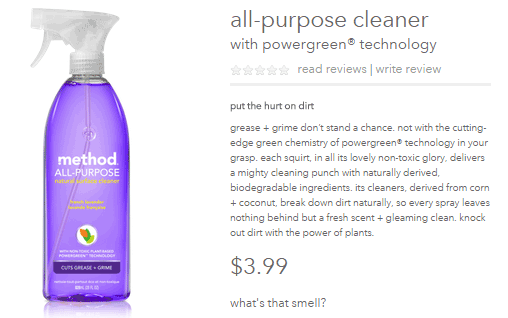
By using a ‘benefit first’ content strategy, customers will immediately know what’s in it for them. A benefit answers the question, ‘so what’. When you show the benefits of your product, think of it like telling a story. You want to engage the audience and leave them feeling an emotional connection.

Take this example from Method Home.

method-home

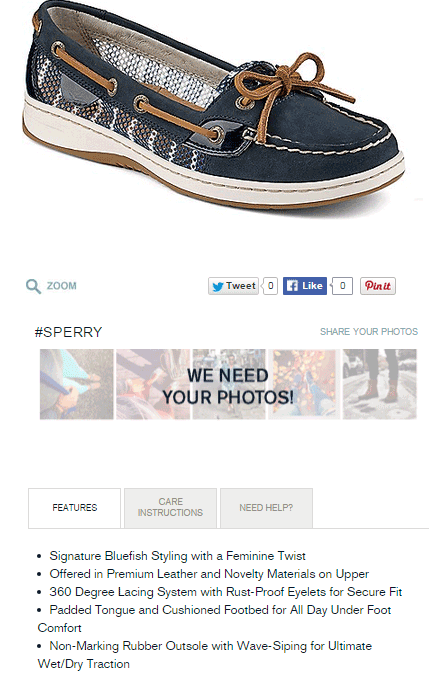
Product features are physical characteristics of a product sold and marketed by the company. It includes the form, color, size, weight, odor, material, and tactile qualities. They provide added functionality to products on your site.

Take a look at the product features from Sperry.

sperry

5.    Write for Scanners

Most online consumers scan a web page first, and if they find it interesting, they go on to read the whole article.  A study by Nielsen Norman Group revealed that 79% of customers don’t read, but scan when they are browsing.

It’s because of the following reasons:

  • Reading on a computer screen strains the eyes.
  • People’s ever-dwindling spans of attention.
  • Customers who are mostly surfing the Internet are on-the-go.
  • There are millions of websites vying for their attention.

You can persuade your prospects to actually read your content by using some of these eye candy elements:

  • Headings and subheads, relevant and on topic
  • Bullet lists to highlight benefits and features
  • Font variations, bold, italics, and colored links
  • Short sentences and short paragraphs, each with one idea only
  • Images and infographics
  • Memorable captions

How to Write Seductive Sales Copy

Ecommerce merchants have many pages to write copy for. Home and landing pages, category pages, product descriptions, articles, and shopping messages are just a few. It’s always important to strengthen your editorial skills whether you’re a seasoned writer or a novice.

Formula for Persuasive Copy

You can always start with the 1-2-3-4 method. It’s a handy little checklist for any copy you write. It’s so simple you won’t have to look it up.

1.     What I’ve got for you

What’s your product? What does it do? Who is it for? Let the folks know what they’re in for. Start with a simple overview, a birds-eye look at what you’ve got to offer.

persuasive-copy-formula

What’s in the box? These are the ‘features’ of your product or service. The best way to list them is usually a series of fascinating bullet points. Include enough specifics to make the product feel valuable.

When you can, attach a benefit to each feature.

Instead of saying, “Next-action worksheets come with every module.”

A better version is, “Next-action worksheets come with every module, so you can take what you’re learning and immediately put it into action.”

2.     What it’s going to do for you?

There’s a saying that goes, “sell with benefits, support with features”.

What’s better about life with your product? Talk about the great benefits of taking action. Describe the end result, or the “after” picture once your customer has bought your product and used it as you recommend.

3.     Who are you?

Most of the time, you need to establish your authority. Show in your copy that you know what you’re talking about. Make your customers believe that you’re a trustworthy and worthwhile person.

For instance, if your site is all about gardening, and there’s a photo of you in front of your own garden, customers will consider you more credible.

4.     What you should do next?

 This is where call-to-action comes in play.

From a copywriting standpoint, it’s been proven time and time again that if you want someone to do something, you’ll get better results if you tell them exactly what to do. A MarketingSherpa experiment revealed that two or three “click” link words can lift click through rates by more than 8%.

Never assume that a customer knows the whole process. A reader needs to know specifically what to do next. Don’t just put a link in. Instead, tell her to ‘click here’. 

7 Bulletproof Copywriting Techniques

Many people misinterpret the uniqueness of effective copywriting. It’s more than writing the hard-sell sales letter. A well-crafted copywriting should stand on its own without the overabundance of sales language and design embellishments.

Here are some seductive copywriting techniques from Henneke Duistermaat, a UK based content marketing expert:

  • 1. Create a One Big Idea

copy-headline

A good headline focuses on one big idea – usually your product’s most important benefit. Focus on that one message that you want to communicate to your audience.

  • 2. Short and Broken Sentences

Sales copy is different from academic writing. Readers will not make the effort of reading your entire content. Short sentences are much easier to read than long, spiritless sentences.

It doesn’t matter if you start a sentence with an ‘And’ or ‘But’. As long as it works. Shorter sentences improve the rhythm of copy. Don’t be afraid to cut long sentences into two.

  • 3. Be Memorable with Sound Bites

sound-bites

Sound bites are described as easy-to-remember, easy-to-quote nuggets of wisdom. They communicate one idea in a short and simple way. Contrast or surprise is used to startle the brain and attract attention.

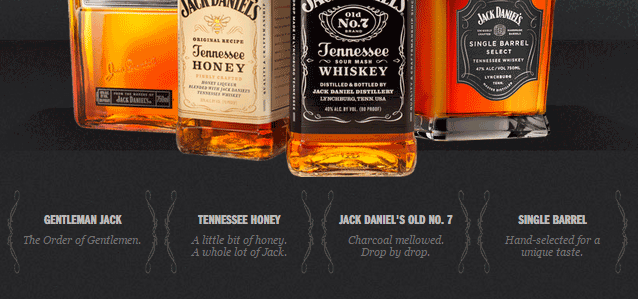
“Everything you need. Everywhere you go.”

“The thinnest, lightest, fastest iPhone ever.”

“So much more than before. And so much less, too.”

  • 4. Be Credible with Technical Details

copy-technical-details

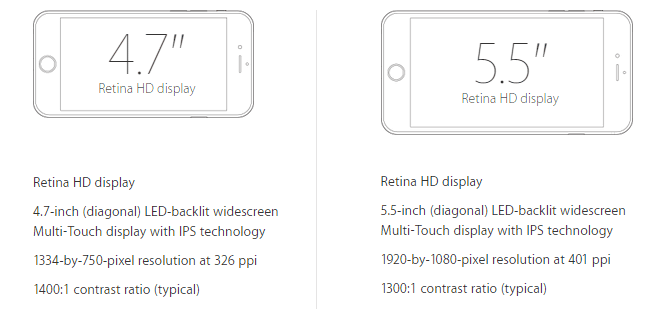
Technical details are not only a sign of expertise, but also enhance trust, and make you more convincing. Presenting exact details actually sell.

  • 5. Fascinate with Stories

What stories can you tell about your product? Can you explain where the idea for your product came from? Sharing stories is a powerful copywriting tool. You can share the challenges you had to overcome, just make the delivery fascinating.

copy-storytelling

  • 6. Persuade with Problems

Customers often search for solutions. So, present features and specifications as solutions to their problems. Consider what problem each of your product’s features solves.

  • 7. Create a Persuasive Call-to-Action

copy-call-to-action

Your site may have a compelling headline, a well-written sales copy, and an unbelievable opt-in offer. But all these things are of no use if you don’t include a clear call-to-action. A good CTA should stand out and be specific.

More inspiring call-to-action examples in this article.

4 Copywriting Tricks Swiped from Psychology

Good persuasive writing leaves you wanting more, right? Here are four useful, little-known tricks from Joanna Wiebe, author of “Copy Hackers”.

1.    Don’t Be Sloppy – Write Rhyming Copy

A study conducted by Dr. Matthew McGlone found that rhyming phrases are somewhat believed more accurately.

Take this Animoto snippet for example. See that second line?

rhyming-copy

Rhyme has the power to influence the way we think, which relates to psychology. So, one rule to consider in writing a copy is, if it rhymes, it must be true.

2.    Use a Word that Humanoids Don’t Expect to See

According to Wiebe, “unusual or unfamiliar material is easier to remember than common material.” This is actually called the Bizarreness Effect.

As a copywriter, you have to grab that chance for recall. And, recall is a big deal not only for converting visitors. Customers need to remember messages as they move through your site. A study from Purdue University found that people were best able to recall messages when bizarre nouns were mixed with common words in a standard sentence.

3.    Repeat Your Message Again and Again

The more you hear a message, the more likely you are to believe it’s true. This is due to the Illusion of Truth Effect. In other words, repetition works.

It’s not just copying and pasting your marketing materials. For the Illusion of Truth Effect to work, you can use a copywriting technique called “3D”. It’s where you write the same message three different ways in sequence.

It actually works best when your audience isn’t that attentive. It doesn’t matter whether or not the audience is concentrating hard, repetition will increase persuasion.

4.    Organize Your Lists so Peeps Remember the Right Stuff

This method is about the Serial Position Effect. It simply states that people remember what they saw first or last, but almost never what they saw in the middle. This affects online customers as well.

So, in creating your copy, what stuff are you okay with your visitors NOT seeing? That’s what you should put in the middle of your bullet list, or in your Features page.

However, there’s always an exception, right? The Von Restorff Effect states that if an item in the middle of your list stands out, your visitors may remember that part better.

Conclusion

Start spotting these persuasion elements in your online store and you’ll be on your way to increasing sales.

Your online store offers you the opportunity to connect with potential buyers and to differentiate your products while establishing credibility and trust. Make the most of this opportunity by diving into your website copy with a clear purpose in mind.

In creating the content for a product description, an advertisement, a landing page, or a sales email, you want the copy to be powerful enough to convert visitors to sales.  Lead your boring copy out of the grave and make it live.

Filed Under: How-To Articles Tagged With: best practices, call-to-action, conversion optimization, copy writing, customer persona, e-commerce, how-to, infographic

10 Things You Can Do Right Now to Improve Your WooCommerce Store

October 10, 2017 By John Leave a Comment

Ecommerce - Improve your WooCommerce StoreAs a WooCommerce store owner, your goal is to make your business as profitable as it can be. Here, we list down 10 things that you can do today to improve your WooCommerce store.


1. Add a call-to-action button on your home page

Adding a call-to-action button on your home page encourages your visitors to take whatever action you want them to take. You can direct them to click on your shop, sign up to your email newsletter, send you an email, call you, or add a product to the cart.

thumbs-up

2. Add your contact details

Making sure that your contact details are immediately visible will increase your site’s trust rating. It can be your email or phone number. You can even add your store’s address if you have a physical store.

3. Add an email capture form

Getting your customer’s emails will allow you to send newsletters or special offers to those who sign up.

4. Remove distractions from your checkout page

Removing distractions from your checkout page will reduce cart abandonment. When a customer reaches your checkout page, you don’t want them clicking anything else except that “Pay Now” button.

5. Add related products to your product page

Adding related products to your products page will encourage your customers to purchase more items from your store. This will increase your average order value.

6. Offer free shipping

Not everyone can offer free shipping. But if you are able to, free shipping can really amp up your conversion rates. You can also offer free shipping with a minimum order value or for specific locations only. Make sure your visitors know you offer free shipping by placing a notice in a prominent area of your site.

7. Optimize your product copy

There are a lot of ways to optimize your product copy. You can optimize your copy to appeal to customers by emphasizing on the problems that your products can solve. You can also optimize your product copy to include technical details. Lastly, you can optimize your copy for ease of reading. How you optimize your product copy really depends on your product and your customer profile. You can use Hemingwayapp to check your copy’s readability score.

8. Optimize images on your WooCommerce store

product-zoom-in

When uploading product images, you must first optimize your product images to make sure you are uploading the correct image sizes. To determine the correct image sizes for your theme, you will need to use the “Inspect Element” feature of your browser. You will then need to go to WooCommerce settings to set the correct image size. Uploading anything bigger than the image placeholder’s size is a waste of resources and will just slow down your site. You can learn how to optimize images for the web in this blog post.

9. Remove sliders and use a single hero image with a call-to-action

Sure, sliders look good. But the truth is, they may actually do more harm than good to your site. Sliders can really slow down a site and a slow site is bad for SEO and conversion rate. Also, sliders can confuse customers and makes for bad user experience. Your website must send a clear message on what you want your customers to do. A slider just confuses your customers with various images that look like advertisements.

10. Make your site is mobile responsive

If you have not updated your site’s design for years, it might not be mobile responsive. This means that your website does not adapt to different screen sizes which makes browsing on a mobile device difficult. This is not good for your site’s user experience. Also, having a mobile responsive WooCommerce store is an advantage in terms of SEO. You can address this by using a responsive theme such as Storefront or the Genesis framework with a Genesis child theme. Both these themes are compatible with WooCommerce.

If you need any help getting any of these things done, you can contact us and we will help you get these sorted. If you have any questions, you can let us know in the comments section.

Filed Under: How-To Articles Tagged With: admin, best practices, call-to-action, content marketing, conversion optimization, design tweaks, e-commerce, how-to, optimizations, page speed, responsive design, website maintenance

  • 1
  • 2
  • Next Page »
Let us support your online store so you can manage your business

Get started today

Get 2 Hours of FREE SUPPORT

We are so confident that you will love our services that we will give you your first 4 hours at a 50% discount

That’s 4 hours for only $75

BUY NOW

Free eBook

5 Things Every Online Store Can Fix On Their Website In The Next Week To Increase Sales

Quick Links

  • How it Works
  • Pricing
  • Blog
  • Contact
  • About Wooassist
  • My Account
  • Checkout
  • Privacy Policy
  • Cookie Policy
  • Terms and Conditions

Wooassist

Australia:
59 Luke St.
Hemmant QLD 4174

Philippines:
San Miguel St.
Poblacion, Iligan City 9200

Connect


Copyright © 2026 · Wooassist

Yours FREE!

5 Things Every Online Store Can Fix On Their Website In The Next Week To Increase Sales