Wooassist

Assistance for Your Woocommerce Store

  • How it Works
  • Pricing
  • Services
    • Site Maintenance
    • AI SEO and Content Marketing
  • Blog
    • How-To Articles
    • Code Snippets
    • SEO For E-Commerce
    • Theme and Plugin Reviews
    • Wooassist News
    • WordPress/WooCommerce News
    • Interviews
  • About Us
  • Contact
You are here: Home / Archives for WooCommerce

James Grasty Tells The Bro Basket Story – The Wooassist Interview Series

April 25, 2019 By John Leave a Comment

This time around, we interview James Grasty from TheBroBrasket. He shares with us his insights on ecommerce as well as the story behind the success of the company that he started with his peers. He has actually started numerous other businesses until he finally found success in his first ecommerce venture. With that, let’s get started.

How did the TheBroBasket website start? What inspired the idea of gifts for men?

It’s actually a pretty cool story. Our MBA Entrepreneurship class at CSU Channel Islands was creating a business from scratch as our class project and the basic idea started as “If women get flowers, then what should men get? A bucket of beer!” which in 2013 was not really a thing you could send. A few of us liked the idea so much we turned it into a real business after the class ended in 2014 launching out website in December of that year. We started out with just a few gifts at higher price points, and a bucket of beer of course, but over time with customer feedback we added a bunch different gifts and made our old ones better. Now here we are almost 5 years later humming along, its been an interesting journey.

James Grasty from TheBroBasket


What are some of the major challenges for TheBroBasket?

Shipping gift baskets full of glassware, glass bottles, food, and accessories AND having it arrive in one piece looking good has been very challenging. It has taken us a lot of time and effort to get it right and things still break on occasion but from where we started we are light years ahead.

James Grasty (middle) with his colleagues Kenneth Connel (right) and Mike Mazza (left).

What has been the biggest challenge for the company?

Getting initial funding from venture, angel, or any kind of investment was a pretty big flop. We had to pile our own money together with some friends and family and launch the business. Honestly, we would have not made it out of our first year without our friend and fellow former classmate investing $10k. That helped us get us through ’til we received our SBA loan. Once we had the funding from that we were off to the races and were really able to start properly growing the business.

What are your tips on how to make a business startup a successful one?

We, as my above example shows you, either be well funded or run a tight ship and really boot strap till you have proof of concept and get off the ground, or both! As someone that started over half a dozen businesses, I would say there are a number of things that I have learned from my successes and my failures.

  • Get proof of concept and figure out if there is actually a market for the product(s) you are trying to sell before you go all in.
  • Have management level experience in the business you are trying to start – I have gone as far as getting a job with a competitor to try and see how they operated.
  • Properly plan, like really get in the nitty-gritty – I can’t tell you how many business I have failed at and seen other crash just because they, and I, didn’t do the proper planning and market research before launching the business
  • Be willing to pivot – we launched the business as a gift basket delivery service, we quickly realized that was not a viable idea and pivoted to a full eCommerce company.
  • Be consistent & persistent – pressure over time will always yield you results.
  • With that being said, know when to fold your hand – I have seen too many people waste countless years and money on businesses and products that suck, just kill it and move on!

How do you think eCommerce has changed over the past 10 years?

Well, I have only been in the game for 5 years, but I did try to start an ecommerce company way back in 2002. I realized I didn’t know enough coding to launch on 3dCart and had to move on. So I would say that the ease with which one can launch an ecommerce business has been one of the biggest changes. You don’t have to know the first thing about coding/programming, and hell you don’t even need that much money. The biggest downside to all that is its so easy now you get a lot of wannabees that think its easy to become some ecommerce stud, and yeah its easy to launch a business online but its still hard as ever to make that business succeed.

What do you think is the future of ecommerce?

I feel like it will continue to get easier and easier to own and operate a business in the ecom world, which is great for society as a whole, but means more competition for us that are already here and more expensive advertising. Amazon will continue to get bigger and Google will do the same, so hedging your bets and diversifying marketing channels and income streams is always a good idea.

How did you get started with WooCommerce?

Funny story; we paid way too much money to a local “website development” company that gave us a terrible website that I could probably make in a day these days, and it happened to be on WooCommerce. Thinking back, we should have been on a hosted solution like Shopify or BigCommerce, but it was what it was. It worked out for the best when we redeveloped the entire site and relaunched it less than 6 months later. We utilize a ton of customization and have customizable products and we would struggle to have these unique product offerings on a hosted solution.

What advice can you offer for aspiring ecommerce entrepreneurs?

Come up with or find a really cool and or unique idea and build a product/brand or service around that. We are looking at acquiring another ecommerce company and I really get annoyed when I find these companies that are just practicing retail arbitrage and/or selling cheap crap from China. Amazon and others are just going to get bigger and they will eat those people’s lunch sooner than later! So your best bet is to have a unique private labeled product and a solid brand that you can stand behind, that will help you become successful and stand the test of time.

Filed Under: Interviews Tagged With: business development, Wooassist, WooCommerce

What to Do When Your WooCommerce Store’s Theme is Abandoned or Outdated?

October 19, 2018 By John Leave a Comment

What to Do When Your WooCommerce Store’s Theme is Abandoned or Outdated

We’ve had a few clients who have used themes that were abandoned by the theme developers. In some cases, the store owners come to us with problems regarding their theme and then we find out that the theme has not been updated in over a year. And when a theme has not been updated in a long time, it is inevitable that features will break.

Features Will Break

Sometimes it may just be small formatting issues. While formatting issues are usually easy to fix, this is just a band aid to a big problem. When running an outdated theme, the ideal solution is to address the root of the problem. Update the theme or change to a different theme that is constantly receiving updates.

Sometimes, an outdated theme can break some more important features when it has deprecated codes. These deprecated codes are no longer supported in current versions of WordPress or WooCommerce. Also, new features introduced in WordPress and WooCommerce may not work on your outdated theme. Unless you do something about it, things will just keep breaking. When a core feature of WooCommerce breaks as a result of an outdated theme, your online store will be put out of commission.

Dangers of Running an Outdated Theme

An outdated WordPress theme is not secure

Aside from breaking your site in the absence of updates, running an outdated theme is a major security issue. You are leaving your WooCommerce store vulnerable to many exploits. Some WordPress security tweaks might help keep your site secure. However, when your theme is not receiving updates, these security tweaks won’t help.

The Solution

The only solution to an outdated theme is to replace it with a new theme that is constantly receiving updates.

One thing to consider though is if you have spent hundreds of hours of work on your current theme. In this case, it might be worth hiring someone that will update your theme. If you are going to have someone updating your theme, make sure that that someone also addressed the latest known security vulnerabilities. Also, consider the costs of maintaining an outdated theme. Would it be more cost-effective in the long run if you changed your theme now?

How to Choose a New Theme

When you’ve decided that you want to go with a new theme, there are a few things to consider when choosing one.

Choose a Theme that is Responsive

A responsive theme is a theme that adjusts to different screen sizes. A theme must look good on both a mobile device and a desktop computer. Since Google now considers mobile devices in its search engine rankings, it is imperative to choose a theme that is responsive. Under no circumstances should you use a theme that is not responsive.

Choose a responsive theme

Choose a Theme that is Light

Another option to consider is choosing a theme that is not bloated by unnecessary features. It is definitely handy when a theme can let you change fonts, colors and your page layout in just a few clicks. However, this means that the theme is bloated with code that will slow down your site. What used to be one line of CSS code to change the color of your navigation menu can be hundreds of lines of code built into your theme. Themes made by Themeforest are notorious for this. And while it does make the life of a non-technical WooCommerce entrepreneur a lot easier, you have to ask yourself. Do you really want to add that much bloat to your site when site speed is such an important factor for both SEO and user experience?

Choose a Theme that was Developed by Trusted Developers

There are hundreds if not thousands of themes to choose from. But how do you know which ones are good? One way to look at a theme is to consider the developers who made the theme. We can recommend using Storefront theme since it is made by the same developers that created WooCommerce. You can be guaranteed that Storefront theme will work with WooCommerce with no issues.

The Genesis framework is also a good option. Note that Genesis is a theme framework and you will need to install a child theme when you use it.

Costs of Changing to a New Theme

Cost of Changing to a New ThemeEven if you choose to use a free theme such as Storefront, changing to a new theme will still cost you. If you are able to change your theme on your own, it won’t cost you anything financially but you’ll still be spending a lot of time on it. Hire people to do the grunt work. Don’t spend dozens of hours trying to work on tweaks to your theme when a developer can do it in an hour or two. If you don’t have access to a developer, you can contact the Wooassist team. We can help you change your theme.

What to Do Before Changing Your Theme?

Before changing your theme, it is best practice to create a development or staging site and test your new theme installation there. Several hosting providers such as WPEngine and Siteground have built in tools that let you easily create a staging site in just a few clicks. You can also create a development site manually.

Also, create backups. Before doing any development work on your WooCommerce store, it is important to create a backup. In the event that you break your site, you always have a working backup that you can restore.

What to Do Before You Go Live with Your New Theme?

When you’ve installed your new theme and you’ve done all of the tweaks that you want, it is important to do some user testing. Testing your site is a necessary step before moving any major changes to the live site. Check out this blog posts for a list of things that you need to check before your site goes live. On top of the list, make sure to check that any custom features that you have added to your site are working.

Do you require any help with changing an outdated theme? Drop us an email and we might be able to help.

Filed Under: How-To Articles Tagged With: Genesis, mobile friendly, responsive design, Storefront, WooCommerce

How to Speed Up Your WooCommerce Store

August 3, 2015 By John 3 Comments

SnapCrab_2015-07-03_10-57-18_No-0000

Aside from the products or services you offer, there’s another crucial factor that may affect your conversion rate. We’re talking about your site speed. Any delay is enough reason to make your customers leave. This converts to lost revenue, which can hurt your bottom-line. How can you prevent or change this? This article will serve as an in-depth guide to and will teach you how to speed up your WooCommerce store.

In this article, you’ll learn about the following:

  • Why invest in site speed optimization?
  • What hardware and software you need?
  • Improving Site Speed by Caching and Minifying
  • Speed Up Site by Optimizing Images for Web
  • Using a CDN to Increase Site Speed
  • Cleaning Your Database to Speed Up Site
  • More Ways on How to Speed Up Your WooCommerce store

Why Invest in Site Speed Optimization?

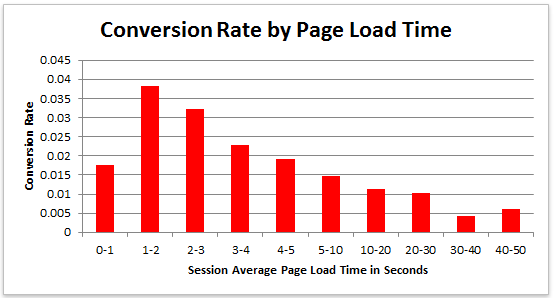
Studies reveal revealed that 47% of visitors expect a page to load in under 2 seconds. Around 40% of these will abandon a web page if it takes more than 3 seconds to load. Meanwhile, 52% claim that quick page loads are important for their loyalty to a site.

conversion-rate-by-page-load-time

What do these findings tell you, a site owner?

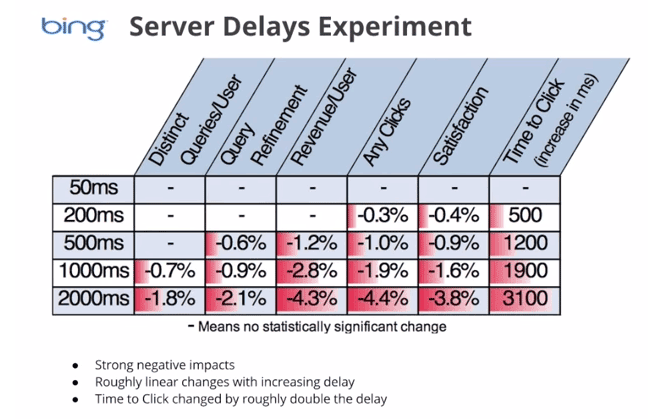
It just shows that site speed is very important. Those two seconds are crucial to capture your visitor’s attention, convince them to hang around, and increase your chance for conversion. Microsoft Bing also conducted a research about server delays and the effect they bring on user behavior.

server-delays-experiment

According to the results, a 2-second longer delay in page responsiveness reduced user satisfaction by 3.8%. They navigated 4.4% fewer pages, with a 4.3% lesser e-commerce revenue per user. Every second matters online.

Here’s the thing: visitors – your potential customers – can’t really tell the difference if a page is ‘just’ slow, or isn’t working at all. Thus, a slow website is quite the same as not having one. Most users won’t stare at the screen and wait. They move on to the next website and never come back.

site-visitors

Google announced that it has included site speed in its ranking algorithm. If your site speed is slow, it can affect SEO by having reduced rankings. They even launched a new web-based tool, which analyzes the performance of web pages.

With these information, we now know that site speed not only sells, but also leads to customer satisfaction and increased conversion.

If your site speed is slow, it’s time to fix that. Read on.

What Hardware And Software You Need?

The foundation you set up for your e-commerce site has a lot to do with its speed. If it’s the root of the problem, quick fixes won’t help. But, what makes a good foundation, and how can you set up a website that runs at lightning speed?

Web Hosting Provider.

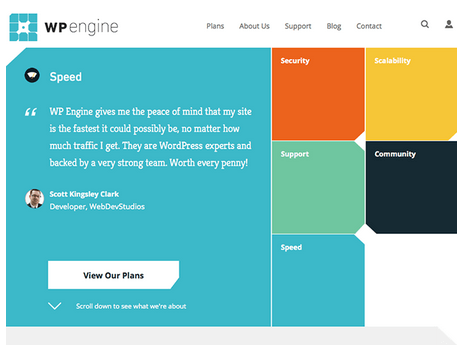
What’s your current hosting package? For an e-commerce site, you shouldn’t go with the cheapest. They may have limited RAM, processing power, and disk space which won’t benefit your site at all.

wp-engine

Wooassist recommends:
Wpengine and Siteground

Please note that we are affiliates of these hosts but we have only chosen them based on our years of experience dealing with hosting services for our clients’ and our own sites. And we can say that these two are among the best. If you were to sign up to either of them, we’d be grateful if you did so by clicking either of the links above.

WordPress Themes

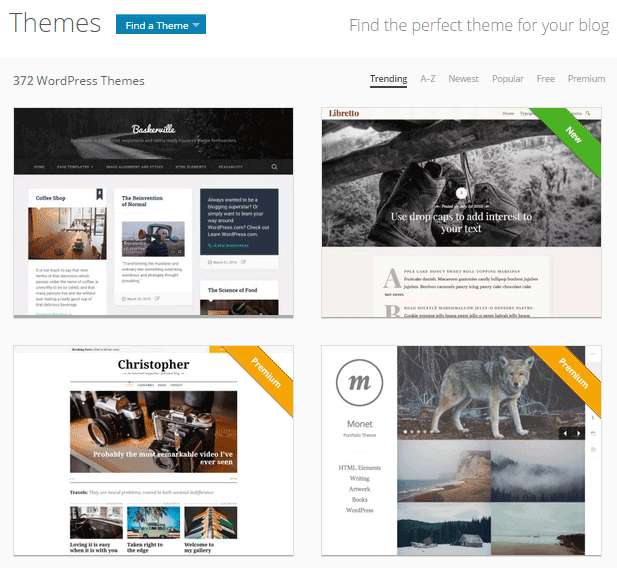
Not all WordPress themes are created equal, and not all are extremely fast and well-coded. In choosing a theme, checking the demo speed is a must. Tools such as Pingdom will give you an idea of how well-coded it is.

wp-themes

Wooassist recommends:
Storefront by Woothemes or Any HTML5 theme at Studio Press

Content Delivery Network

CDN is a system of distributed servers that accelerate the delivery of web content, and rich media to internet-connected devices. Since your bandwidth is spread across many different servers, the load on a single server is reduced.

Wooassist recommends:
Wpengine comes with CDN included or Cloudflare

Improving Site Speed by Caching and Minifying

caching-and-minification

Let’s start with the most popular, and probably, the easiest thing: Caching.

What is Caching?

Caching is storing your dynamic content in the server as static content. Serving static content is faster as opposed to dynamic content, which means longer page load times. It’s a fundamental technique of reducing database load and speeding up WordPress websites.

There are two types of Caching:

  • Client-Side
  • Server-Side

Let’s move on to Minification.

When developers make code, they make code with a lot of white space. This practice makes the code easier to read and understand for humans. However, computers don’t need that white space. It just makes reading the code take longer.

Minification is removing all that white space and optimizing the code. This makes it easier for machines to make parsing the webpage faster.

How to Implement Caching and Minification?

It may sound all too complicated, but don’t worry. It is really very simple. All you need is one plugin to do both, and it has all the caching and minification solutions you need.

W3 Total Cache

It’s the second most popular plugin with almost 4 million downloads and a 4.5 star rating. W3 Total Cache is more suitable for high traffic websites running from a VPS or a better hosting environment.

How to Set up Caching with W3 Total Cache?

  1. Before installing W3 Total Cache, uninstall other caching plugins like WP Super Cache
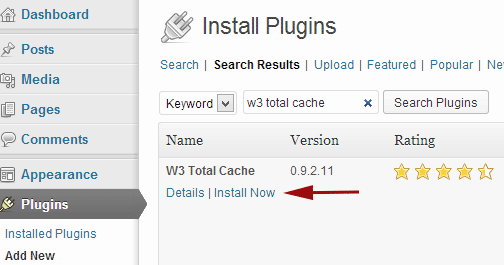
  2. Go to your WordPress admin panel and click on Plugins > Add New

w3-total-cache

  1. Search for “W3 Total Cache”
  2. Click on the ‘Install Now’ button and then activate
  3. Click on Performance on your WordPress dashboard and go to General Settings
  4. The first option that you see on this page is Page Cache.
  5. Check the ‘Enable’ box
  6. Click on ‘Save all settings’

By having this enabled, you will significantly decrease your load time.

How to Set up Minification with W3 Total Cache?

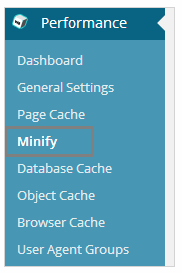
  1. minifyGo to your WordPress dashboard and click on Performance
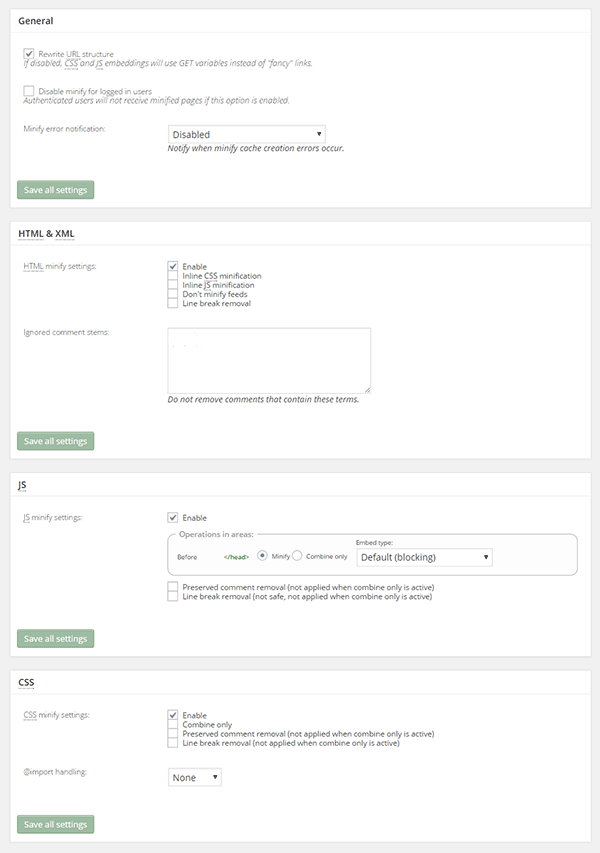

  2. Look for ‘Minify’ under the Performance menu
  3. Tick “Enable” for HTML & XML, JS, and CSS.

minify-2

  1. Click on ‘Save all settings’

The goal of minification is to make the source code “smaller” in order to improve your site’s performance. Get a more detailed information on each of the settings offered in Minification here.

Speed Up Site by Optimizing Images for Web

Your customers won’t wait around for that picture to load.

customers

Another technique to improve your online store’s performance is optimizing images on your website. High-resolution images may look great, but when you’re loading a 2MB image, it’s going to do more harm than good.

Aim for an image size of less than 100KB, but if you can go smaller without compromising quality, then better. It’s a rule of thumb to not let the images look bad or pixelated.

Striking a balance between a good looking image, and an acceptable image size, shouldn’t be a complex task.

Here are a few ways on how to optimize images for the web:

Using Photoshop

Before you upload your next product photo, logo, or banner image to your store, check the image size first.

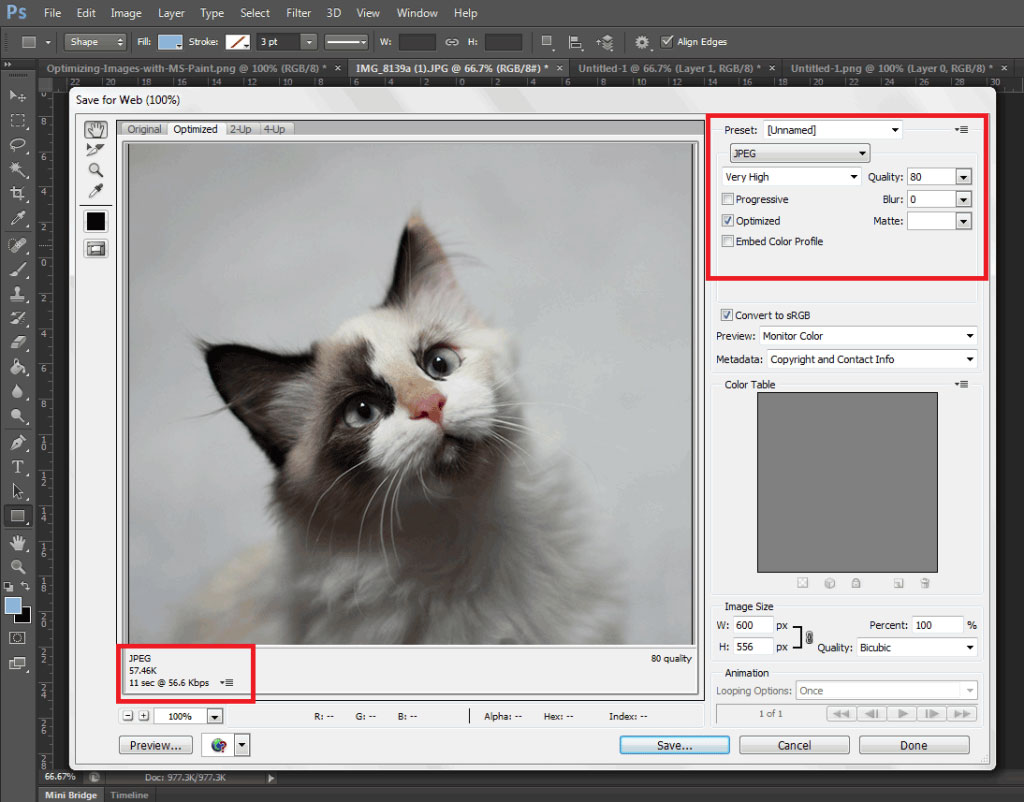
optimizing-images-in-Photoshop

Open the image in Photoshop and view it at a 100%.

If the exact size is too large to be displayed on a computer monitor, you need to edit the size of the image. You don’t have to be a Photoshop wizard. Just open the image on Photoshop, and resize or crop your image to the appropriate size. Apart from that, you also need to consider its format and compression.

If you have a style, preset image sizes that you should be using. Click on File and Save for Web (Ctrl + Shift + Alt + S). The smaller the size the faster the image loads on the page.

Using WordPress Plugins

What if you don’t have Photoshop? And, you don’t have the time to optimize every image you add to your e-commerce store? You can always rely on some WordPress Plugins.

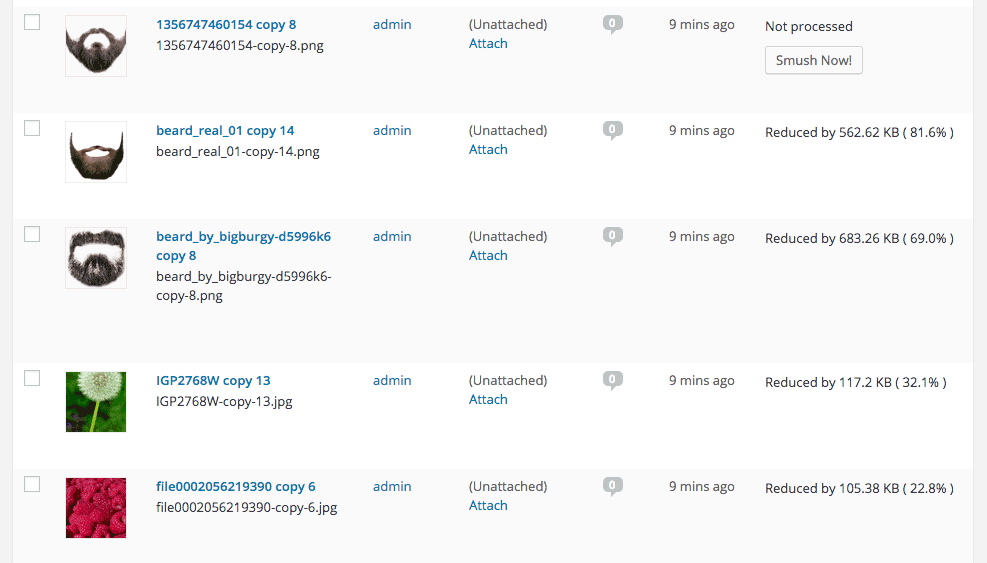
WP-Smush

Take WP Smush, for example. It’s popular for stripping hidden, bulky information from your images, reducing the file size without losing quality. You just need to upload your images, as you normally would, and the plugin will do its work behind the scenes.

The free version of the plugin cannot optimize images larger than 1M. You need to upgrade to WP Smush Pro to optimize images up to 8 MB.

Using a CDN to Increase Site Speed

CDN

So far, we’ve talked about optimizing images, caching, and minification. Now, it’s time to explore the concept of using a Content Delivery Network or CDN, and how it can help increase your site speed.

What is a CDN?

As mentioned earlier, CDN is a network of servers located at different locations around the world. It functions to cache the content of your website, so it can be delivered faster to your visitors based on their location.

Let’s say you’re server is based in Australia. Visitors far away from your geographic location will have a hard time connecting to your website. This would result in delayed responses.

With a Content Delivery Network, browsers will have a nearby server that they can connect to. This will deliver your content much faster. CDNs will mostly benefit the websites that cater to a global audience.

Because there are many options available, choosing the right CDN for your website can be tricky. It depends entirely on your needs, and the popularity of your site. Large-scale enterprise sites usually use popular CDN companies Akamai and Level3.

Setting Up CloudFlare CDN through CPanel

When it comes to small website owners, one of the more popular CDN solutions is CloudFlare. They offer a basic free plan that includes fast site performance, board security protection, and powerful stats about your visitors.

If you’re not sure if your hosting is a partner, you can check this list from CloudFlare.

According to CloudFlare, on average, a website using the CDN will load twice as fast, use 60 percent less bandwidth, have 65 percent fewer requests, and is more secure.

If your website is hosted on a CloudFlare hosting partner, you can easily use the tool available on CPanel.

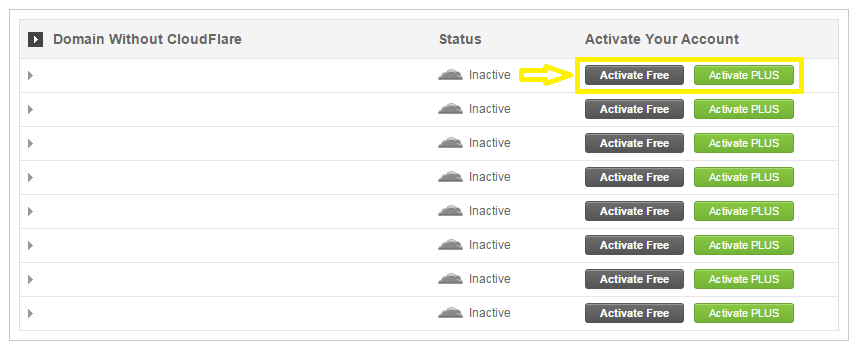
  1. Go to CPanel’s ‘Site Improvement Tools’

cloudflare

  1. Click on the CloudFlare icon
  2. Tick ‘Activate Free’ for the free version or ‘Activate PLUS’ for the paid version

cloudflare-in-cpanel

  1. Enter your email to create an account with CloudFlare
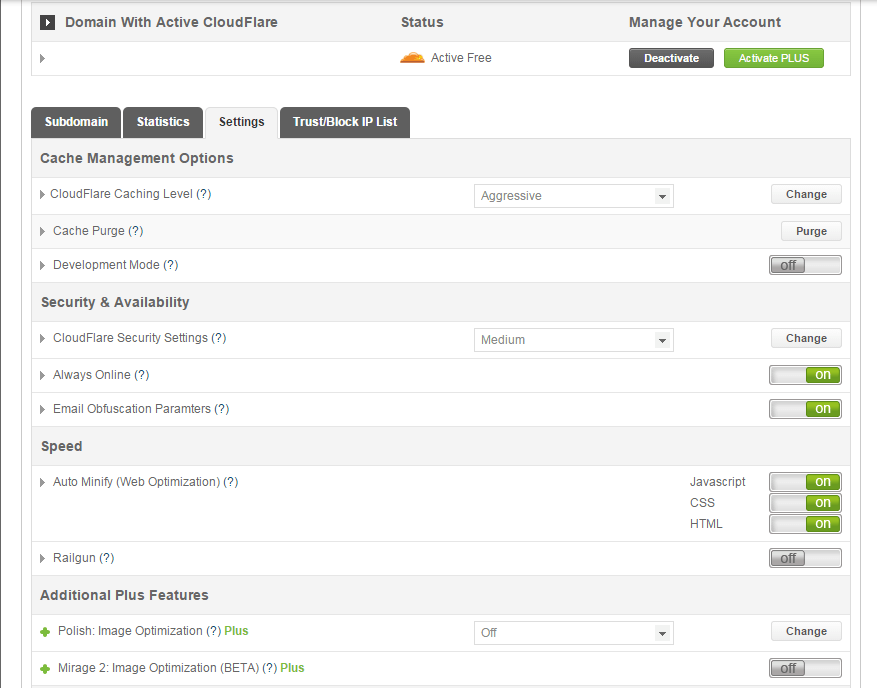
  2. Once activated, click ‘Manage’ to tweak certain settings

cloudflare-settings

And that’s it. Your CloudFlare CDN is all set and the performance of your website should be improving soon.

Setting Up CloudFlare Manually

Here’s what you need to do too set up CloudFlare manually:

  1. Sign up for an account
  2. Add your website on “Select a website” page for scanning
  3. A list of all found DNS records will be shown
  4. Set any subdomains that you would like to pass through CloudFlare
  5. Click on “I’ve added all missing records, continue” once you’re ready.
  6. Choose a plan, free or paid (SSLs won’t work with the free version)

You also need to edit the name server to the new one provided by CloudFlare. You can do this by going to CPanel, and clicking on Domain Manager. Then, go back to CloudFlare settings and click on “I’ve updated my name servers, continue”.

Note: It may take up to 24 hours for the name servers to be completely active.

With a CDN in place, your site should be running a lot faster. This improves the overall user experience and even boost your conversion rates.

Cleaning Your Database to Speed Up Your Site

cleaning-your-database

It’s a strategy that’s rarely discussed. Nevertheless, it can speed up your site just as well as the other methods. It’s maintaining and cleaning your database.

You might think that database is just one of the requirements for a WordPress install. It is, however, more than just that. If you keep your database clean and optimized, it can shave a few seconds of loading speed.

Remember, one or two seconds saved could mean the difference between a bounce and a conversion.

What’s In Your Database?

A database is just like your computer’s hard drive. It’s where all your data is stored. It contains important information such as: posts, pages, your WooCommerce products, comments and product reviews, users and customer information, URLs, etc.

For those who have been using WordPress for a while, doing regular clean ups allow you to reduce your database size. This can lead to quicker, and smaller backup files.

What’s there to clean?

cleaning-your-database-2

Over continued use of WordPress, your database accumulates many spam comments, copies of post revisions, trashed comments, remnants from plugins you are no longer using, themes, and more. When that becomes too large and bloated then website performance will suffer.

Backup Your Website First!

Before you start any database cleaning, it’s very important to create a backup of your website. If your database gets erased or corrupted, you stand to lose everything you have written. There are a couple of plugins in WordPress that can help you do this.

Your hosting provider will most likely have a backup of your website too. Here’s more detailed information on backing up your database in WordPress.

Cleaning Your Database

You may clean up your website database manually, or use these awesome plugins:

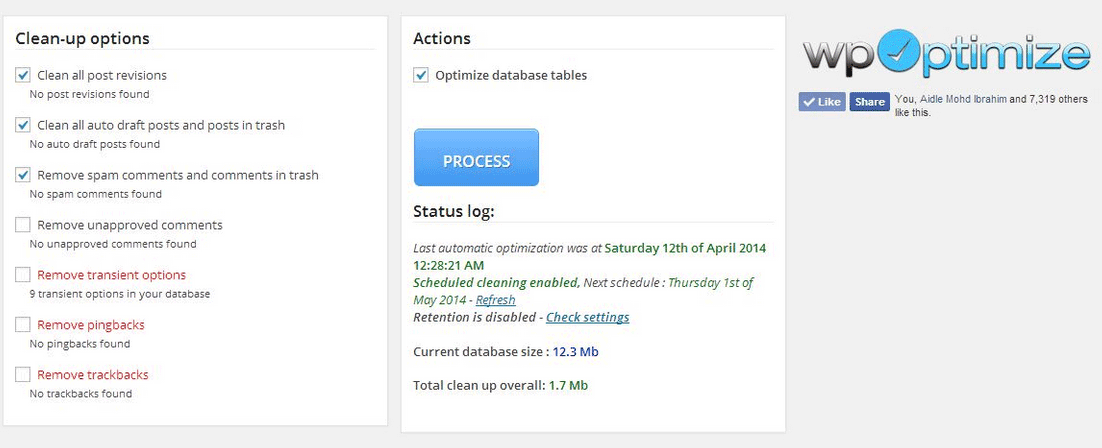
  1. WP-Optimize

wp-optimize

One of the most popular and easiest plugins for cleaning your database. It allows you to schedule a regular database cleanup which can be pretty handy. However, WP-Optimize plugin uses direct delete SQL queries which can leave orphaned data left behind.

  1. WP-Sweep

This plugin allows you to clean up unused, orphaned and duplicated data in your WordPress. It can also show you a report of how much clutter you can clean. WP-Sweep uses proper WordPress delete functions.

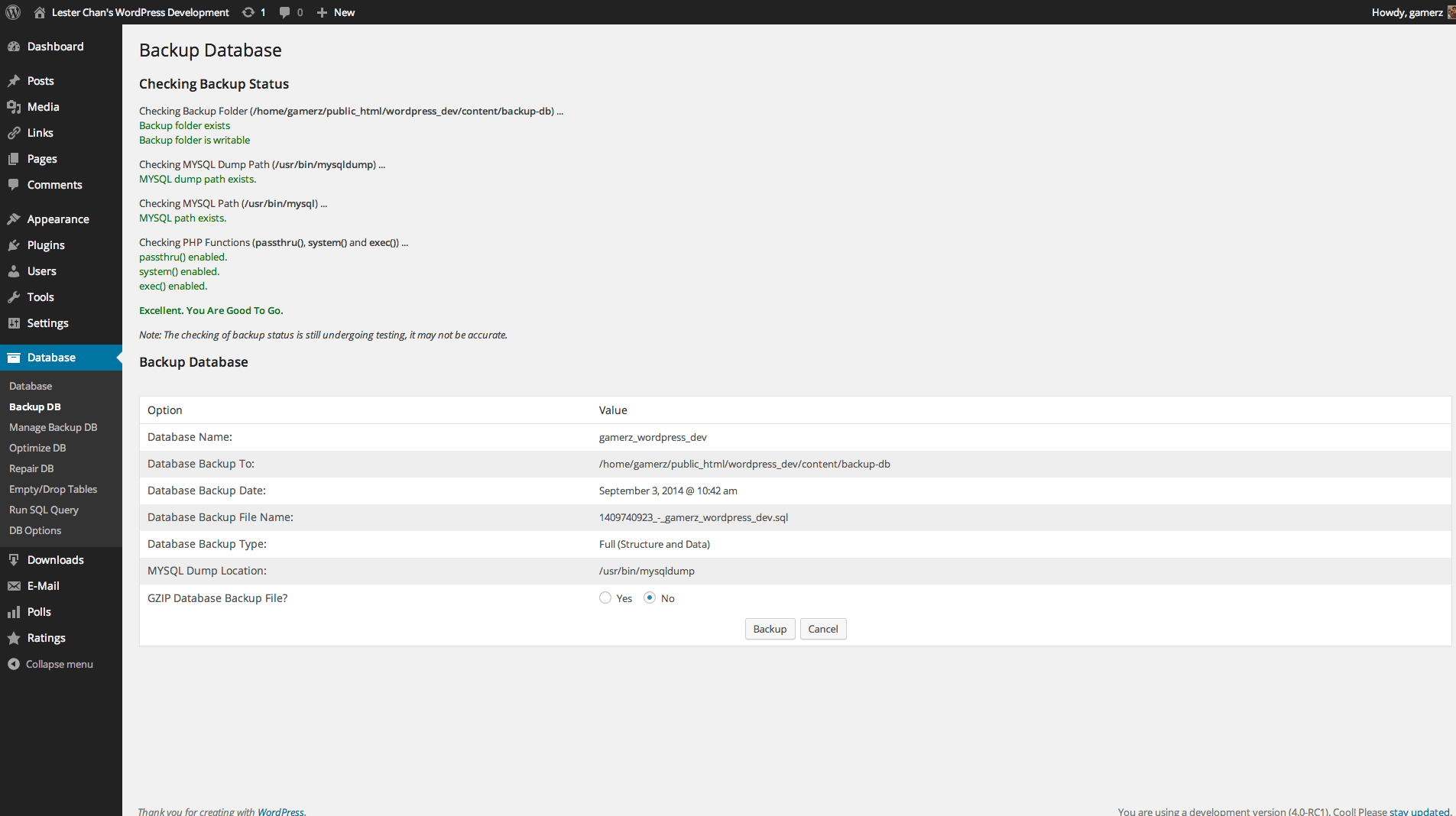
  1. WP-DBManager

wp-dbmanager

Geared for more advanced users, setting up WP-DBManager can be tricky if you’re not familiar with database elements. It offers more customizable options and features, but it cannot clear bloat.

If you want to use WP-DBManager for its features, look for other means to clear database bloat.

More Ways on How to Speed Up Your WooCommerce Store

woocommerce

Once you’ve set up a solid foundation for your e-commerce site, it’s time to do some fine-tuning. That is, if you’re still having speed issues with your WooCommerce website. Here are more useful tips to help you to solve this matter.

1. Upgrade your hosting account

As soon as you can afford it, do upgrade your hosting account. It would be better to use a good hosting publisher rather than shared hosting. Not only it can improve your site speed, but also prevent down time during high traffic periods.

2. Test your current speed

Checking the current performance of the website gives you a benchmark to compare against after you make the changes. There are various tools to help you check your loading speed:

  • Yahoo! Y slow
  • Google Page Speed
  • Pingdom is the quickest and easiest one

pingdom

3. Use minimum number of WordPress plugins

Using too many plugins in a website can slow your website speed, particularly if you’re using social-sharing plugins. It will help to identify plugins that are slowing you down.

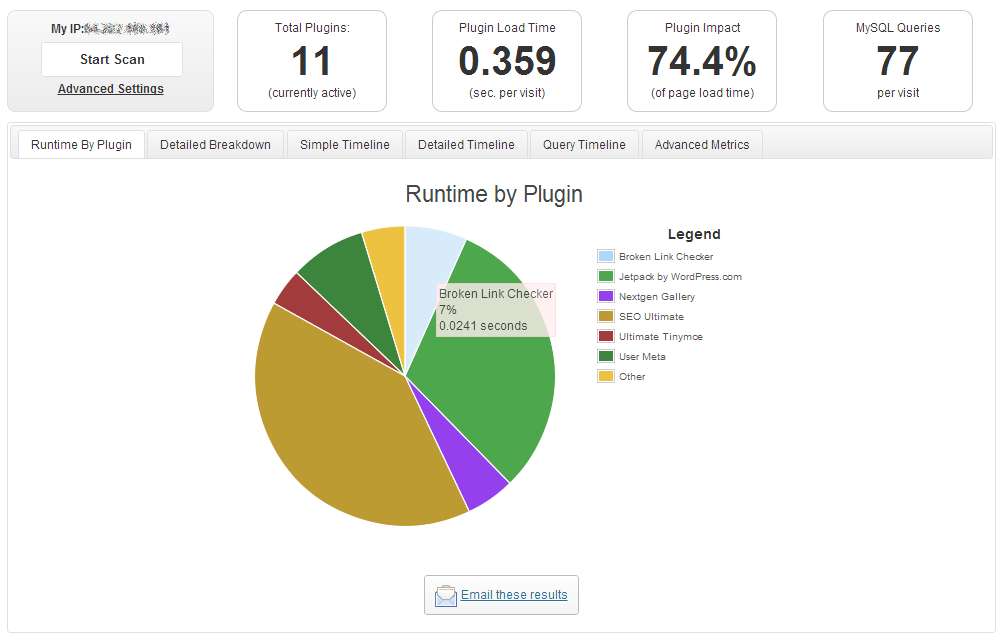
P3 (Plugin Performance Profiler) is a well-known diagnostic plugin that shows which plugins are slowing down your site. It creates a profile of your WordPress site’s plugins’ performance by measuring their impact on your site’s load time.

p3

Once you’ve identified them, you can make an informed decision about whether to keep them, replace them or remove them entirely.

4. Compress your website

Gzip is the most popular, and effective compression method that reduces the response size by about 70%.

Compressing files on your computer as a ZIP file can reduce its total size, which makes it both easier and faster to send to someone. Gzip works the same way, but with your Web page files.

After installation, Gzip automatically compresses your website’s files as ZIP files. This can save bandwidth, and speed up page-loading times. When a user visits your site, their browser will automatically unzip the files and show their contents.

Some plugins will add Gzip to your website in a few simple clicks. For those who want to install it manually, it’s actually very simple.

    1. Open your .htaccess file, which is found in the root directory on your server
    2. Add the following code
AddOutputFilterByType DEFLATE text/plain
AddOutputFilterByType DEFLATE text/html
AddOutputFilterByType DEFLATE text/xml
AddOutputFilterByType DEFLATE text/css
AddOutputFilterByType DEFLATE application/xml
AddOutputFilterByType DEFLATE application/xhtml+xml
AddOutputFilterByType DEFLATE application/rss+xml
AddOutputFilterByType DEFLATE application/javascript
AddOutputFilterByType DEFLATE application/x-javascript
  1. Test whether it’s working by going to Check Gzip Compression

5. Optimize your homepage

Your homepage is a crucial part of your site because visitors land there the most. There are a few easy ways to ensure that your homepage loads quickly.

  • Show excerpts instead of full posts
  • Reduce the number of posts to 5 or 7
  • Remove unnecessary sharing widgets
  • Remove inactive plugins and widgets that you don’t need

A clean and focused homepage design will help your page not only look good, but load quicker as well.

6. CSS on Top and JavaScript at the Bottom

It’s widely recommended to link your style sheets as close to the top of the page. The reason is that browsers won’t render a page before rendering the CSS file.

Meanwhile, JavaScript should be as close to the bottom of the footer. Doing so can prevent browsers from parsing anything until it has fully loaded.

With just this simple fix, page-loading speed will improve, since files are forced to be downloaded in the optimal order.

7. Disable content hot linking and leeching

When other sites direct link to the images on your site, it can make your server load increasingly high. This adds up as more and more people “scrape” your posts.

Conclusion:

Just How Important is Site Speed?

importance-of-site-speed

Consumers take advantage of online shopping because of the convenience it offers. Most people can’t stand waiting in lines. And, they especially get frustrated when it’s taking longer than expected.

Now, going back to your website, users won’t wait for your site to load. If it takes too long, they’ll definitely find another online store.

Another thing to keep in mind is that Google wants the best experience for their users, giving site speed utmost importance. They even reward sites that have clean codes and download quickly.

Page speed is now one of 200 or so signals Google uses to determine rank. More importantly, do it for your existing and potential customers. The faster a page loads, the more satisfied they will be.

Filed Under: How-To Articles Tagged With: best practices, caching, CDN, CloudFlare, conversion optimization, CPanel, Genesis, how-to, minification, optimizations, photoshop, SEO tools, site speed optimization, Siteground, Storefront, W3 Total Cache, website maintenance, WooCommerce, woothemes, WordPress, WPengine

Dustin Hartzler: On Being a WordPress Fanboy and Helping Out the WordPress Community

March 9, 2016 By John Leave a Comment

Dustin-HartzlerIn our quest to connect with top influencers in WordPress and Web Development, we found a kindred soul in Dustin Hartzler: a self-confessed WordPress fanboy, a WooCommerce customer support team member, and an entrepreneur who follows a strict schedule and values life outside work. He started using WordPress in 2009 and has taken big steps since then to immerse himself in his craft and contribute to the WordPress community.

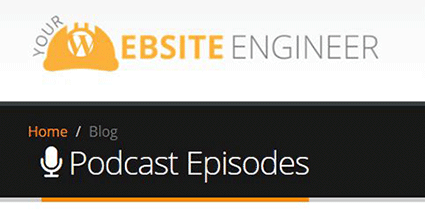

Aside from being a Happiness Engineer at Automattic, Dustin is the founder of yourwebsiteengineer.com, a site devoted to WordPress with podcasts published weekly, and the owner of Hartzler Digital Media. He took a moment off of his busy schedule to answer our questions. In this interview, get to know Dustin as a keen web developer and a successful entrepreneur. What works for him may work for you too.

1. You described yourself as a WordPress fanboy. What do you think sets WordPress apart from other content management systems?

The community. There are so many passionate WordPress folks and they are all willing to share their knowledge with others.

2. What does it mean to be a Happiness Engineer at Automattic? What’s the most rewarding aspect of your role? What is the most challenging?

A Happiness Engineer is a member of the customer support team that helps people every day on how to use WordPress. I’m a Happiness Engineer on the WooCommerce team, so I get to debug and troubleshoot customer’s websites all day. It’s super challenging because every site is different; on a different host, with different plugins, with different themes. It’s most rewarding when I find bugs in our code, submit a request and have the issue fixed for all of our users.

Dustin-Hartzler_Woo-Happiness-Engineers_Automattic_screengrab
Dustin with other Woo Happiness Engineers. Image Credit: https://dustinhartzler.com/2015/12/16/co-working-and-holiday-party/

3. In your opinion, what separates good developers from great developers?

Great developers continue to work on their craft. They also don’t add every feature that is requested. They have a vision of what the code should do and program until that vision has been met.

4. How would you describe your workflow when working on a project? How do you approach a challenging project? Do you have any rituals that you follow?

It depends on the project. I like to map things out and break them into little steps. It’s hard for me because I have way more ideas than time to implement.

5. What inspired you to start YourWebsiteEngineer.com?

After listening to podcasts for three years, I knew I wanted create my own show. I was also starting my own website development company at the time and thought it would be a great way for me to learn WordPress better; by teaching others. I’m still going strong with my podcast, releasing a new episode every week since 2010.

yourwebsiteengineer_podcast_screengrab_425
Image Credit: http://yourwebsiteengineer.com/category/podcast/

6. What are your favorite development tools and why?

I love using Sublime Text for coding and have the GitHub app installed on my computer so I can track all of my changes to my code with version control.

7. Why did you choose to have a career in web development? And why focus on WordPress?

I love the challenge of creating something out of nothing. There’s never a dull day when I’m constantly learning new things everyday. I’m focusing on WordPress, because I decided back in 2010 that I wanted to master one platform and I picked WordPress back then.

8. How do you manage your time between work and being a family man?

I balance having a full-time job and my family by having a very scheduled life. I add everything to my calendar. This helps me not over-schedule my day. I also wrap up all work by 4:30pm. This gives me time to spend with my family and I can enjoy non-computer things in the evening.

Dustin-Hartzler_family
Dustin with wife Melody and daughter Kenley. Image Credit: https://dustinhartzler.com/2015/12/05/happy-birthday-melody/

9. What’s in store for Dustin Hartzler? Do you have any big projects going on for you? What’s keeping you busy on your spare time?

When I look at OmniFocus, I’ve got tons of things that I want to do, but don’t have the time (like most entrepreneurs). One thing I want to release this year is a guide at how to manage your time / plan your day; written for developers and others who don’t have to report in for a job every day.

10. If you had one advice to give to a budding developer, what would it be?

Always keep learning. Find something that you love and continue to get better at it. If you like building themes for clients, pursue that. If you’d rather write code, write code.

Filed Under: Interviews Tagged With: best practices, WooCommerce, WordPress

WooCommerce vs Magento: Which One Is Best For You?

July 22, 2015 By John 3 Comments

WooCommerce vs Magento

Last time, we compared WooCommerce with Shopify. Now, it’s WooCommerce Vs Magento. Here we will look at their strengths and weaknesses as e-commerce platforms. This will help you find out which is the better fit for your business.

Are you considering moving form Magento to Woocommerce? We have done this for a number of businesses and it can be a daunting task.

The functionality does not cross over exactly and it can become complex web of options and decisions. We offer a service to help with this here.

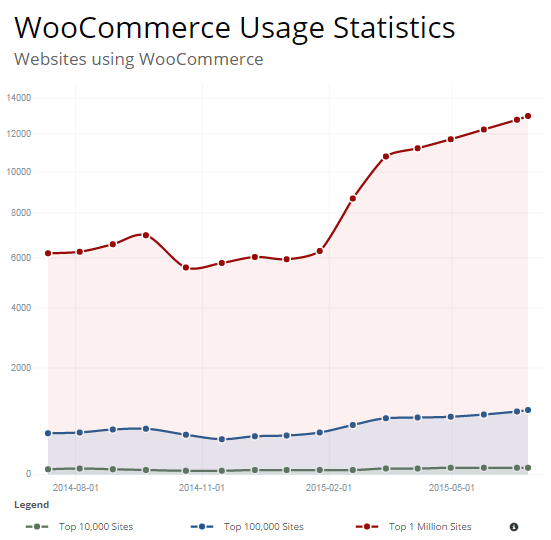
As of June 22, 2015, stats from Builtwith reveal that WooCommerce is now the most popular e-commerce platform. There has been an increase of 247,245 sites just this quarter. Records show there are around 937,743 live websites using WooCommerce.

woocommerce-usage-statistics

Meanwhile, Magento still remains the high-performance, scalable e-commerce solution for large businesses. More than 240,000 merchants worldwide put their trust in this software. Data shows 427,571 websites are using it.

If you are torn between the two, then you’ve come to the right place.

When it comes to choosing the right e-commerce platform for your business, there are a number of things to consider. We’ll go right ahead and explore the factors one by one.

The Face-Off: WooCommerce vs. Magento

face-off

WooCommerce:

This open source e-commerce plugin for WordPress was launched in 2011. It was aimed at small-to-medium online merchants already comfortable with a WordPress set up. To date, there has been a total of 8,432,130 WooCommerce downloads. It quickly became famous for being free in nature and its simplicity to install.

Leading brands that trust WooCommerce include:

woocommerce-brands

Magento:

The platform is now owned by eBay, a global leader in e-commerce. It provides two distinct versions – Community Edition and Enterprise Edition. Since its launch in 2008, there has been more than 500,000+ downloads. One can find more than 2000 various extensions for additional functionalities.

Leading brands that trust Magento include:

magento-brands

ROUND 1: ‘Getting Started’ Comparison

Platform: Both WooCommerce and Magento’s Community Edition are open-source e-commerce platforms. That means both platforms are available for free. Bigger businesses can upgrade to Magento’s Enterprise edition, for a subscription fee. WooCommerce is totally free, but it has fewer features compared to Magento’s Community Edition.

woocommerce

Pricing:

For development costs, Magento may be priced a bit higher. This is because you’ll need to find a capable developer to help build out the site. However, it gives you a better initial suite of features. WooCommerce is entirely free to download and install, but you’ll probably need to buy some of its extension. For instance, its full range of payment options.

Hosting:

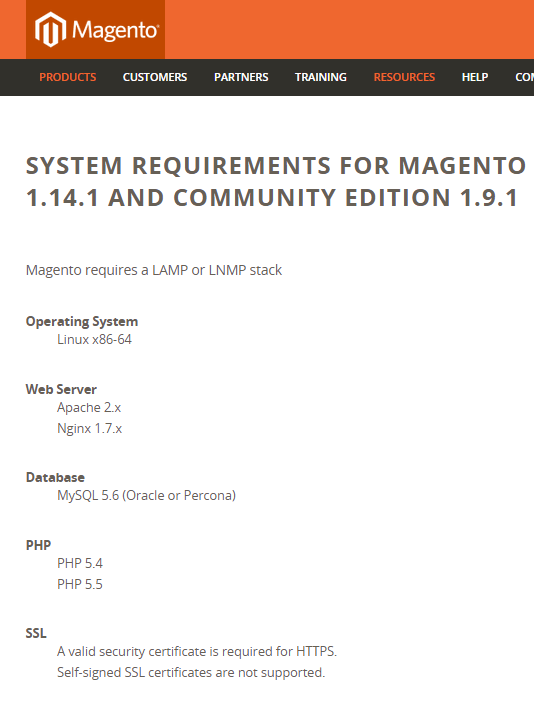
WooCommerce is an extension of WordPress therefore, there are very few server requirements. There should be no issue, as long as your server supports MySQL or PHP. As for Magento, there is a slightly longer list of server requirements. It may also require some technical knowledge before one can set it up properly.

magento

Installation:

The WooCommerce plugin is developer and designer friendly. It is easy to customize and change. It has a thorough help section, and video tutorials for beginners to help you get up and running. Magento comes with a full installation wizard, and a comprehensive help section. Videos and tutorials are available from the support community as well.

Round Conclusion:

Because WooCommerce is easier to use, the platform is ideal for less sophisticated users. Magento may be a more flexible solution for sophisticated clients selling online at an enterprise level. However, it’s a bit tougher to understand.

ROUND 2: Plugins and Themes

woocommerce-themes

Plugins: WooCommerce has a slight edge over Magento because it can take advantage of WordPress plugins. Nevertheless, a lot of community extensions are available for Magento, which can be easily integrated to suffice business requirements.

Themes:

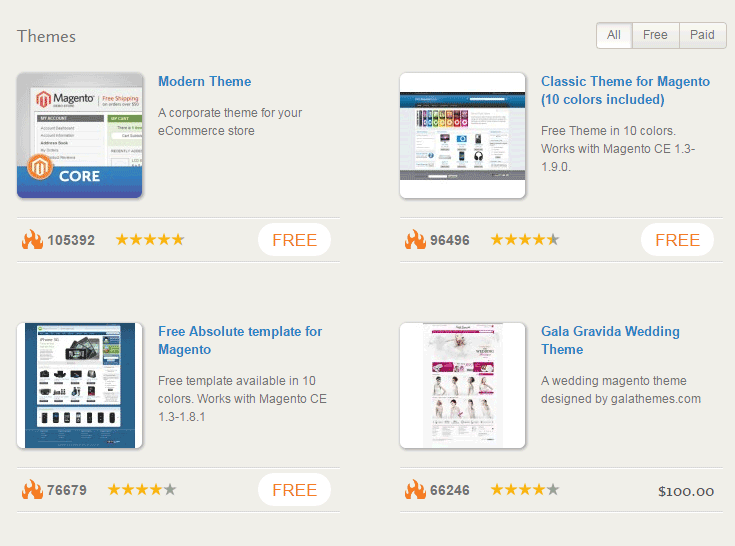
For both platforms, there are a lot of free and premium themes to choose from. Magento themes offer flexibility, functionality, and can be easily extended and modernized. But, you’ll need a professional webmaster to install, set up and update even the easiest Magento theme.

magento-themes

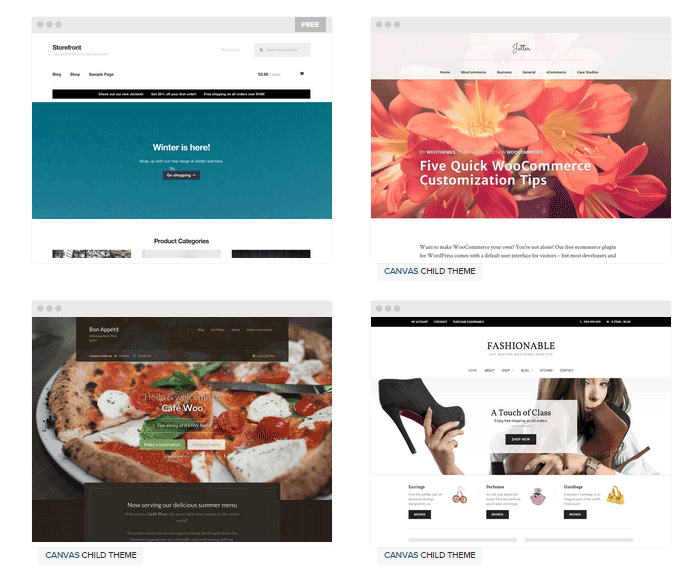
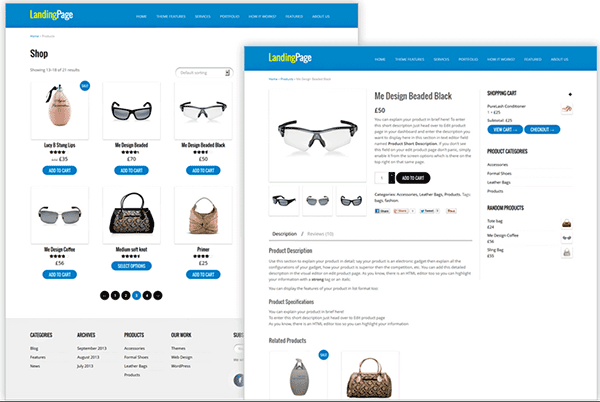
There are more WooCommerce themes to choose from compared to Magento choices. They’re also incredibly easy to install and upgrade. The only downside is they can conflict with other WP plugins. So, compatibility should be checked with WooCommerce before installing of any new plugin. This article can tell you more about the theme pros and cons of both platforms.

Customization:

Just because it’s free, doesn’t make WooCommerce a rigid platform. In fact, there’s a lot of room to customize and tweak your online store to a level of uniqueness. You can change pre-set CSS styles and color, tweak the code and experiment with the special features which each theme offers.

themes

With Magento, you also have the option to customize the theme as much or as little as you’d like. Your theme is designed to utilize all of Magento’s excellent built-in features that you should be taking advantage of.

Round Conclusion:

Magento can give you a bit more when it comes to extensions, but WooCommerce tends to be preferred because it relies on plugins for extra functionality. They basically have the same theme features. But, if you choose WordPress for your projects, then go for WooCommerce themes.

ROUND 3: Product Volume and Variations

Volume:

There is no real consensus on how many products you should have, for a WooCommerce store to be manageable. There are many WooCommerce stores out there that have thousands of products and manage just fine. According to MarketPress, 57% of WooCommerce store owners have more than 100 products, 40% has more than 250 products and 11% has up to 1,000 products.

store-volume

Magento will support an unlimited number of products. But as your catalog grows, you may start running into resource limitations that’ll require hosting upgrades, etc. When running a large catalog, product, URL rewrite, and inventory indexing are the major issues.

Variations:

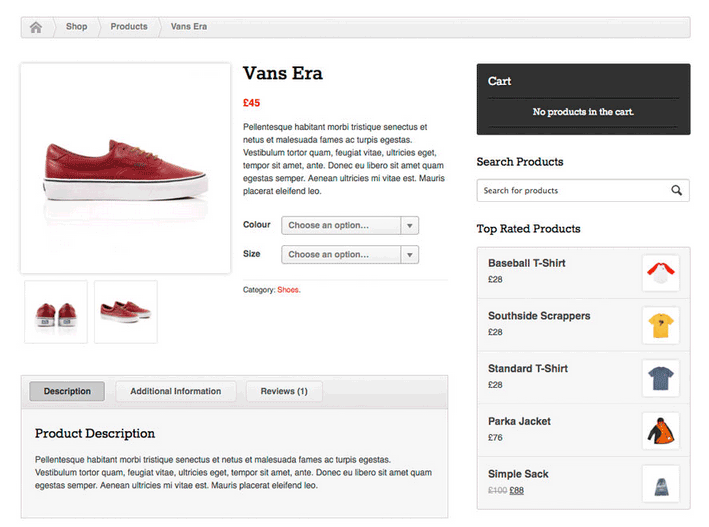
Many WooCommerce users believe that WooCommerce only support up to 50 product variations per product, but this isn’t true. It can only create 50 variations at a time if you choose to automatically create the different product variations. After that you can again create another batch of 50.

magento-2

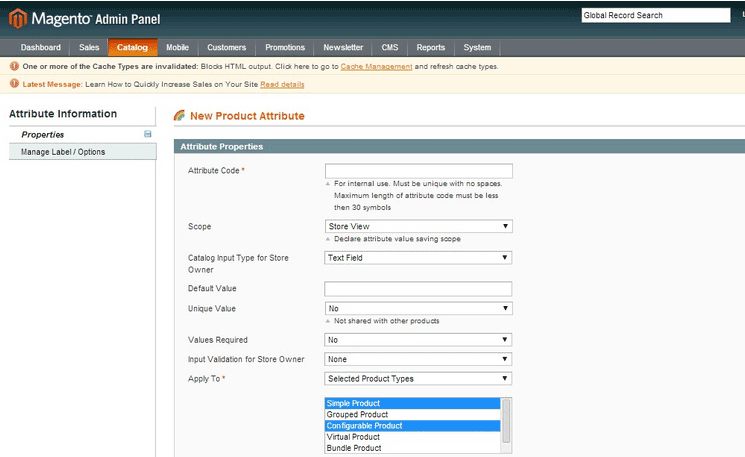
Magento supports multi-variant products, which they call configurable products. The platform treats a configurable product as a collection of simple products, and each variation has its own SKU and inventory listing. Here are steps to adding configurable products in Magento.

Multi-Store:

Multi-store is native to Magento. Let’s say you want to sell computer parts online, and your spouse wants to sell kitchen tools. It is unlikely that you would sell both of these product lines in a single store. With Magento, you can do both by setting up separate websites, wherein each can have its own domain name.

magento-multi-store

It’s possible to run WordPress as a multisite installation, and for each site, you can install plugins. Doing so allows you to control all three stores from one WP admin. However, WooCommerce doesn’t support this feature and cannot run multiple stores.

Round Conclusion:

As earlier mentioned, Magento is the better choice if you have a lot of products or products variation. Magento’s multi-store option is something to consider. While WooCommerce can handle an unlimited number of products, it becomes a lot difficult to manage if you have too many.

ROUND 4: Features and Ecommerce Trickery

Product Relations:

Magento features upsells, cross sells, and related products, which can all lead to more sales. You’re also able to add discount codes, and use an advanced filter to navigate your products. You can view them all on the same account.

magento-products

It’s simpler with WooCommerce. You can rate products and showcase best sellers, or sale items through the available widgets. Anything more complex than these features will require an add-on. The navigation is sophisticated, but not as much as Magento’s.

Integration:

WooCommerce integrates seamlessly into WordPress. It gives site owners the ability to set up and publish blog posts, as well as create content with its easy-to-use CMS. You can take advantage of the almost limitless plugins available to make your site do practically anything.

As for Magento, its CMS is nowhere near as well developed as WordPress. That is why creating a custom menu structure is more challenging compared to WP’s drag and drop user interface. To even establish a blog in Magento, an extension is required.

Navigation:

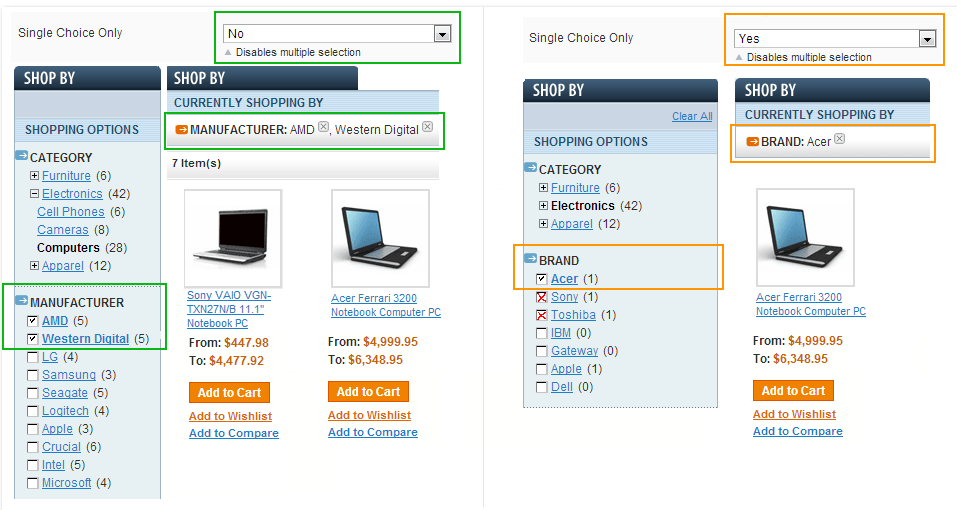
Making the navigation path simple and obvious for potential customers can decrease your bounce rate. Magento stores allow customers to filter product listings on the criteria they prefer, which includes price range, color, brand, size etc. This advanced navigation gives them a more efficient shopping experience.

magento-navigation

Just like Magento, WooCommerce also has layered navigation, but it only allows selecting a single attribute for filtering. With its custom navigation, however, you can easily mix and match categories and pages. You can arrange the menu items via their drag and drop interface.

Analytics:

WooCommerce has a built-in analytics system. It can show you data, such as total sales, sales by date, average order totals, individual customer statistics and much more. It neatly presents the figures via graphs, without the user ever having to leave their admin panel.

woocommerce-analytics

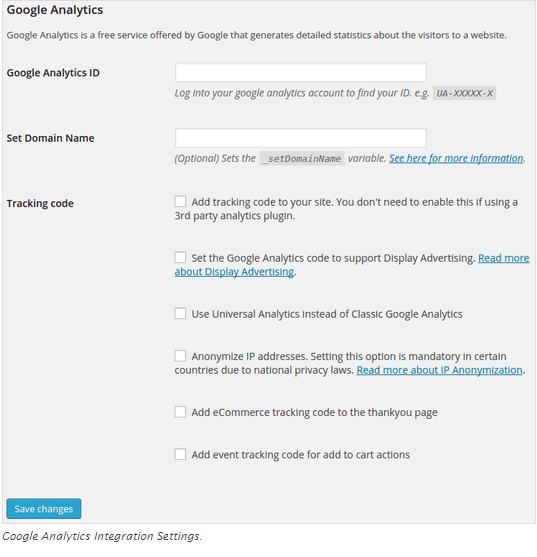
Although Magento doesn’t have their built-in analytics system, they provide a section to implement Google Analytics. Site owners can configure the free Google service to monitor their web sites’ traffic and conversion ratio. It can list and report the customers that make purchases and what they buy. You can follow these steps.

ROUND 5: SEO and Technical Support

SEO:

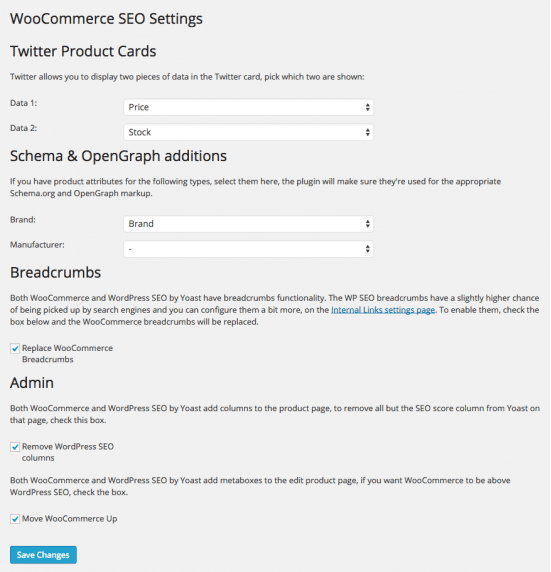
WooCommerce runs on WordPress, a renowned content creation platform. It’s one of the most reliable options when it comes to search engine optimization. Blog is organized, making it easy for admins to add and edit body content, as well as meta information. Here’s more information on WooCommerce SEO.

woocommerce-settings

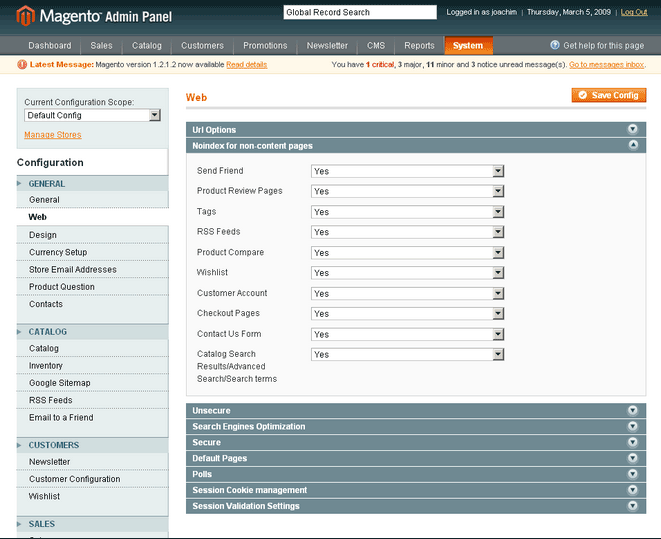
Magento is also one of the most search engine friendly e-commerce platforms. Admins can implement a bevy of SEO techniques within Magento to enhance store ranking. You don’t need to do much to improve the on-page SEO. The main thing to do is to enable the URL rewriting.

magento-configuration

Support:

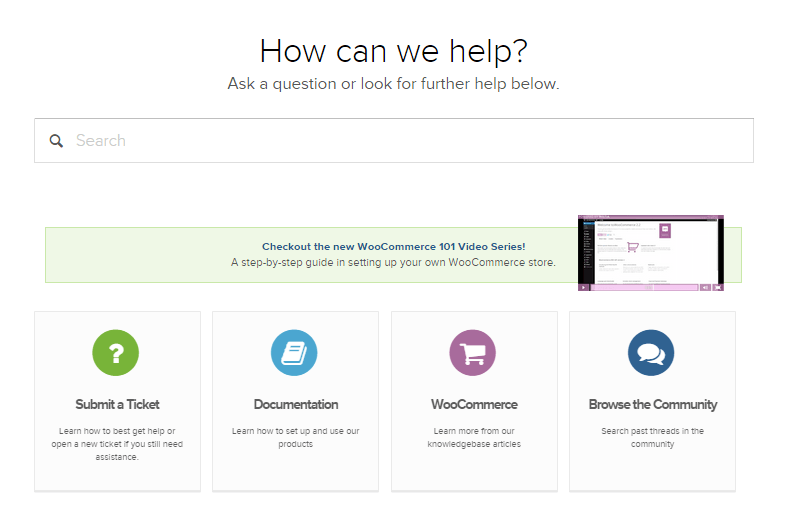
Because WooCommerce is a free platform, strict support is only provided for paid products. Most of the time, users are left to figure it out themselves. However, there are people on forums who are happy to lend a hand. And, there are companies like Wooassist, which provide a dedicated assistance with WooCommerce configuration, installation, and general use.

how-we-can-help

Although Magento’s team of support is available 24/7 around the globe, they provide resources to merchants based on the product you’re running. They offer assistance for installations and downloads, configurations, bug issues, and troubleshooting. Support for their community edition is provided through online forums as well.

Round Conclusion:

Both WooCommerce and Magento are SEO-friendly platforms. But, the well-supported and self-hosted WooCommerce can offer a wider range of free or low cost add-ons. If you aren’t technically-skilled, go for WooCommerce. Even without a strict customer care, the fact that it’s easier to use allows store owners to run it with minimal effort.

ROUND 6: Marketing Promotions and Tools

marketing-and-promotion

Landing page:

Building landing pages with WooCommerce can power numerous purchase options. Its reporting interface lets you know exactly how many sales occurred and when. You can also accept payments directly on site using any payment gateway, and can tie third-party shipping APIs to provide real time shipping rates.

There are many landing-page extensions in Magento, which can let you create multiple landing registration pages for your marketing campaigns. Similarly, it offers an affiliate tracking code to analyze the number of customers brought by each page. You can set payment configurations and shipping options for international users.

Newsletter:

WooCommerce is offering a flexible MailChimp integration for free. Admins can automatically subscribe customers to a designated MailChimp list.  It can help them stay up to date on their purchases. You can also opt for paid versions.

newsletter-configuration
Magento has its own newsletter plugin, which can help you inform customers about new promotions and discounts. The Magento Newsletter functionality allows store owners to send newsletters to clients who are subscribed to them. They also started to support MailChimp.

Round Conclusion:

WooCommerce core is bundled with numerous marketing features. It offers a simplified coupon system and improved support for discounting products to help you run sales and promotions. Marketing tools offered by Magento are neither expensive nor difficult to integrate as well.

In terms of marketing, it’s not a question of which one is better because both can be very powerful in their own rights. It is more a question of which one is right for your company.

Summary of Features and Drawbacks

woo

WooCommerce Features:

  • WooCommerce is entirely free to download and install, and there are very few server requirements.
  • Storefront design is clean and simple, but highly customizable. There are hundreds of themes available, and plenty of add-ons to optimize your site.
  • The reporting tool allows you to analyze incoming sales and reviews, stock levels and general store performance.
  • There are a variety of payment gateway extensions available. WooCommerce supports PayPal accepting credit cards and PayPal account payments.
  • Responsive design options, so your store will look good on a laptop, tablet or smartphone.
  • There is no real consensus on how many products and categories you should have.
  • Very SEO-friendly, with excellent blogging capabilities, to help you rank highly in Google searches.

WooCommerce Drawbacks:

  • Limited high-end features to support very large stores.
  • Some paid extensions are required, so the costs could quickly add up to be able to build a great store.
  • No free customer care, except for community forums.

magento-1

Magento Features:

  • Themes offer flexibility, functionality, and can be easily extended and modernized. You can customize the theme as much or as little as you’d like.
  • Magento will support an unlimited number of products and multi-variant products
  • Magento stores allow customers to filter product listings on the criteria they prefer, which includes price range, color, brand, size etc.
  • Huge community of users that offer help and support.
  • Very powerful system, so perfect for larger ecommerce stores. Scalable, so it can handle however many products you need to sell.
  • Offers multi-store feature to set up separate websites, wherein each can have its own domain name.
  • Multi-currency support, and mobile friendly with strong SEO functionality.

Magento Drawbacks:

  • Steep learning curve for those newbies. Could take a long time to learn how to use the system.
  • Add-ons are much more expensive than those available on the other platforms.
  • Its powerful system requires a dedicated server, which can be quite expensive.
  • Only offers free customer support to Enterprise version and Premium Enterprise version.
  • You might need to hire a professional who is able to code.

Are you considering moving form Magento to Woocommerce. We have done this for a number of businesses and it can be a daunting task.

The functionality does not cross over exactly and it can become complex web of options and decisions. We offer a service to help with this here

How to Choose an E-commerce Platform?

choose-platform

There are a number of things to consider when choosing the right e-commerce platform for your business. Before moving on to the final round, learning these factors will allow you to invest into an e-commerce platform that is right for your business.

Stock Size:

Consider the size of your stock, or the volume of products you’re planning to sell. If it’s just a couple of products, don’t go for a complicated platform. Make sure you’re paying the smallest amount of money for the services that you require.

Design options:

How would you like your online store to look? Most shoppers rely on site aesthetics to decide whether to trust a site. Your e-commerce platform should allow you to control and customize your online store.

Catalog:

If you’re planning on selling a diverse line of products, check the platform’s catalog features. Is it flexible enough for your presentation requirements? Be sure that it can present all of your products in the best possible way.

Payment Method:

PayPal is the easiest and popular payment processor, and not all platforms for e-commerce support third party these types of payment methods. Better check your platform-candidate regarding the payment methods they favor.

Payment Plan:

Select the platform that best suits your budget. Both WooCommerce and Magento offer free versions, but you’ll might need some extra features and extensions, for updates and maintenance. Look for opportunities to pay monthly amounts.

FINAL ROUND: Which One is Right for You?

e-commerce

Professional Requirements:  WooCommerce is extremely easy to use and can be handled even by the novice users. Magento, on the other hand, requires professional skills and some background knowledge on web development.

Magento Site
Magento Site

Setup and Customization: Setting up a website through Magento may demand adequate effort from the developer. Customization can also be time-consuming. When it comes to WooCommerce, you have WordPress as your structural and functional framework. Because WP’s admin panel is self-guided, a customized website can be launched in just a short period.

Flexibility and Functionality:

WordPress supports a large pool of themes and plugins, which can be applied to WooCommerce. Users are provided with flexibility both in design and performance. Compared to WP, Magento supports a smaller number of templates and extensions.

WooCommerce Site
WooCommerce Site

Premium vs. Free:

The base for WooCommerce – WordPress – is totally free to download and use or modify. Magento’s Community Edition is also free, but the Enterprise version is offered as premium. Magento extensions are also very costly. Meanwhile, premium WP templates are less expensive and easily affordable.

You’d think WooCommerce is a clear winner here, but it also has its limitations. It all depends on what your business can sustain.

Concluding Remarks:

Small and medium enterprises (SMEs) will most likely find more value from WooCommerce since it is easier to set up and use. Larger scale businesses can find more value in Magento as they are more likely able to justify the higher development costs.

Magento Site
Magento Site

SMEs will find good value in Magento because it offers more features out of the box. Inversely, larger businesses can also still find good value in WooCommerce being a user-friendly platform.

WooCommerce Site
WooCommerce Site

For larger companies selling a wide range of products, and businesses that have plans of expanding, Magento may be the best choice. For smaller stores looking for a simpler, initial user experience, WooCommerce will give you a great start.

Magento Site
Magento Site

To summarize, we list down below the possible reasons you should favor one platform over the other.

When to Choose WooCommerce?

  • If you have a limited development budget
  • If you are comfortable and familiar with the WordPress platform
  • If you have less than 1000 products and product variations.
  • If you want a platform that is easier to use
  • If you only have one e-commerce store

When to Choose Magento?

  • If you have a big development budget
  • If you want more functionality out of the box.
  • If you have more than 1000 products/product variations
  • If you are more of a technical user
  • If you want to manage more than one site on one backend.

Are you considering moving form Magento to Woocommerce. We have done this for a number of businesses and it can be a daunting task.

The functionality does not cross over exactly and it can become complex web of options and decisions. We offer a service to help with this here

Filed Under: Theme and Plugin Reviews Tagged With: e-commerce, Magento, WooCommerce

  • 1
  • 2
  • 3
  • …
  • 15
  • Next Page »
Let us support your online store so you can manage your business

Get started today

Get 2 Hours of FREE SUPPORT

We are so confident that you will love our services that we will give you your first 4 hours at a 50% discount

That’s 4 hours for only $75

BUY NOW

Free eBook

5 Things Every Online Store Can Fix On Their Website In The Next Week To Increase Sales

Quick Links

  • How it Works
  • Pricing
  • Blog
  • Contact
  • About Wooassist
  • My Account
  • Checkout
  • Privacy Policy
  • Cookie Policy
  • Terms and Conditions

Wooassist

Australia:
59 Luke St.
Hemmant QLD 4174

Philippines:
San Miguel St.
Poblacion, Iligan City 9200

Connect


Copyright © 2026 · Wooassist

Yours FREE!

5 Things Every Online Store Can Fix On Their Website In The Next Week To Increase Sales